THE NUREMBERG PRINCIPLES
by International Law Commission (1950)
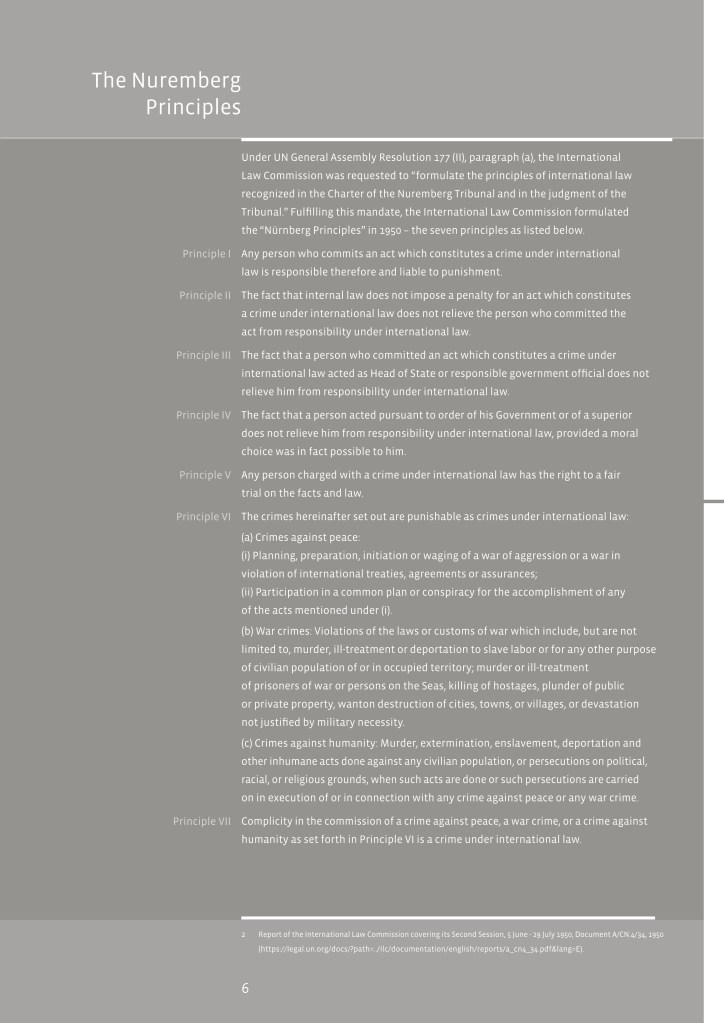
World war two culminated with the victory of the Allies and the defeat of the Nazis. Numerous leading nazis stood trial for war crimes and crimes against humanity during the International Military Tribunal, also known as the Nuremberg Trials, which occurred between 20-11-1945 and 01-10-1946. In light of these significant events, the International Law Commission formulated the Nürnberg Principles. The seven principles each provide guidance in relation to international law. Together, the Nuremburg Principles clearly indicate that there is no legal immunity available for a crime against peace, a war crime, or a crime against humanity. And that, the accused has a right to a fair trial based upon the facts and law. For more info see: UN General Assembly Resolution 177 (II), para (a); and the International Nuremberg Principles Academy and its Resource Collection on the Nuremberg Principles (website and free download). Non-fiction. 1 page.
DETAILS:
Title: The Nuremberg Principles found within the Resource collection on the Nuremberg Principles
Year: 1950 / 2020
Author: International Law Commission / International Nuremberg Principles Academy
Pages: Page 6 for the Nuremberg Principles | 1 / 19

Book review by Keith Salter



Leave a comment