THE UNIPOLAR MOMENT IS OVER
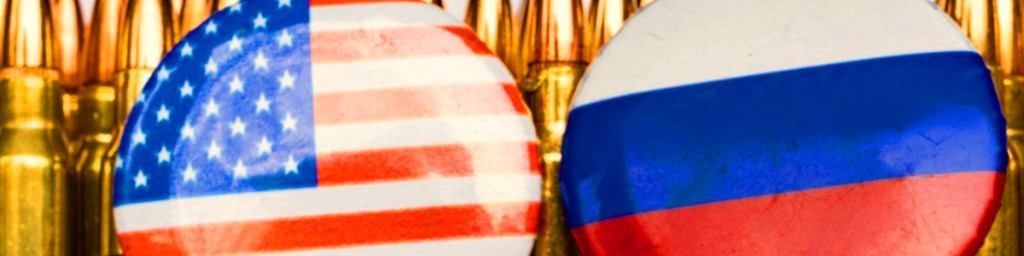
THE COLD WAR
American cultural and political leadership, on an international scale, began its ascendency in the aftermath of WWI. United States global power was further solidified after WWII as much of Europe lay in ruins and was largely bankrupt.
A cold war between East and West emerged soon after the defeat of the Nazis in 1945. The victorious Allies, which included Britain, France, Australia, the United States, and the Soviet Union, and which had successfully collaborated to defeat nazi Germany and imperial Japan, split apart, leaving the Soviet Union isolated, despite the massive contribution made by the Soviets to utterly destroy fascism in Europe.
With nazi Germany in ruins, the West now adopted an anti-communist perspective and moved to undermine the “spread of communism.” During the 1948 Italian elections, the Americans interfered to ensure no communist government would come into power within Italy. This electoral interference is very probably the first serious act in what became known as the cold war.
The cold war was a period of intense competitive rivalry between two great superpowers: the Union of Soviet Socialist Republics (USSR / CCCP) and the United States. A distinct feature of the cold war was its lack of direct confrontation on the battlefield between the Soviets and the Americans.
Both nations did, however, come very close to engaging in a hot war with one another during the 1962 Cuban Missile Crisis. For one fearful historical moment, the world seemed to be on the brink of nuclear war. Thankfully, cooler heads prevailed and nuclear war was avoided.
Both nations also fought proxy wars against one another’s aligned forces situated in foreign countries such as Angola (1975-76) and Afghanistan (1979-1989).
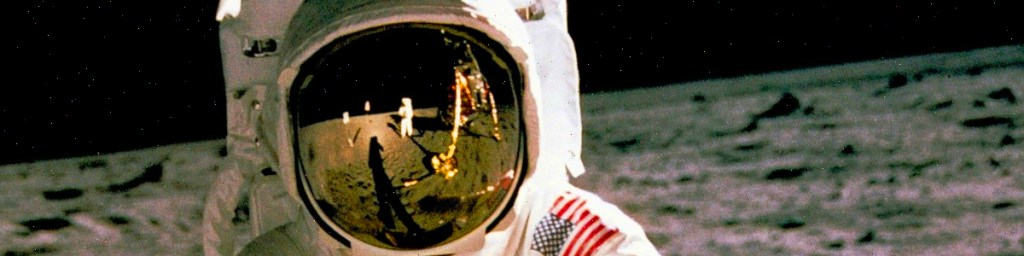
THE CULTURAL COLD WAR
The nature of the competition between the two superpower rivals was not confined to nuclear threats and proxy wars. A significant part of the cold war was fought out within the domain of ideas and values. Separate and unique world views were put forward by each superpower.
Competing concepts found expression through a variety of cultural forms including art, literature, music, architecture, film, television, radio, advertising, museology, and art curation and display. For the Americans, modern art became a CIA weapon.
Technological contests like the “space race” and international sports contests like the Olympics and the World Cup were more than international contests for primacy and supremacy. Each of these highly organised activities served as a forum for the expression of cultural ideology.
To clarify, cultural ideology encompasses a way of seeing and interpreting the human universe; a sense of order that informs how things should be arranged and acted upon; and, an understanding that the world should be a certain way.
Simply put, cultural ideology, which is sometimes referred to as hegemony, consists of a package of ideas that relay critical cultural information to the recipient. Cultural ideology operates as if one has put on a new pair of glasses. Our perceptions are shaped by the lenses through which we peer. We may indeed see the world, but it may be a world defined by hegemony rather than actuality.
The cultural cold war remained a contest of ideas that was fought largely out in the open, within the expressive mediums of art, literature, film, radio, and elsewhere. It’s presence served the informational and cultural aims of the wider cold war. Which, in the main, was to win over the hearts and minds of the world’s population to a particular world view.
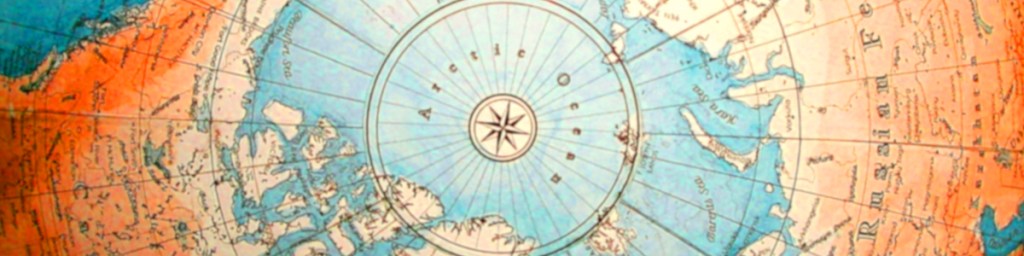
A NOTE ON EAST & WEST
The East consisted of the Soviet Union (USSR / CCCP), which was a multinational state that existed between the years 1917 and 1991. At its largest, the Soviet Union incorporated fifteen nations including Russia, Belarus, Kazakstan and Ukraine.
The West consisted of the United States, western Europe including the UK, the Commonwealth nations including Australia and Canada, and other aligned “free world” nations (also referred to as liberal democracies).
The Non-Aligned Movement (NAM), formally established in 1961, accounted for twenty five nations who chose to sidestep the ideological war between East and West.

THE UNIPOLAR MOMENT
Between 1989 and 1991, the Soviet Union collapsed and the United States, quite suddenly, was left alone in the driver’s seat. Throughout the unipolar moment, which existed between the years 1989 and 2022, the US instigated a brute force campaign that included a number of forever wars.
Forever wars continue for years and rarely appear to have clear objectives beyond the initial destruction of a nation. In practice, each forever war encompassed the military ransacking of a country which included wrecking the nation’s political system, social infrastructure, and business economy. It also included looting the conquered nation through extensive resource theft.
The United States bombed and invaded Iraq in 1991. Then enforced a brutal economic siege which obstructed goods, ordinary staples, and medical supplies from reaching Iraq.
On 11 September 2001, al-Qaeda hijacked four planes and piloted two of them into the Twin Towers located in New York City. Both buildings caught fire and collapsed. A third plane struck the Pentagon and a fourth was crashed into the ground. Nearly 3,000 people died as a result of these terrorist attacks.
Following the 9/11 attacks, the United States invaded Afghanistan in October 2001. It took 20 years for the US to fully exit Afghanistan and no significant victory was achieved. The conventional wisdom is that the US has managed to replace the Taliban with the Taliban.
The sanctions war was still ongoing when the Americans bombed and invaded Iraq a second time, beginning in 2003. An American-directed nationwide search of Iraq for weapons of mass destruction failed to locate any WMDs.
US troops have remained stationed in Iraq and its capital Baghdad for the past twenty-three years. This occupation may soon end, however, as the 30 September 2026 deadline for a complete US withdrawal is now approaching. Baghdad and Washington agreed to the deadline back in 2024.
Prior to the 2014 Madian coup in Ukraine, the US had been backing the creation of an anti-Russia. Following the coup, the US continued to provide financial and material aid to the new nationalist government. Which in turn, launched military attacks against ethnic Russians living in Ukraine.
The unipolar moment delivered little more than extreme violence and large scale destruction for those nations and peoples that bore its brunt. The perpetrator of that violence and destruction was the United States, which deployed its military and other aligned proxy forces against nations that were nearly always militarily weaker. Simply put, the US never fought a war against a peer competitor until its Ukrainian proxy compelled Russia to act.
When Russian President Vladimir Putin delivered his Munich speech in 2007, it signalled the beginning of the end for the unipolar moment (although we didn’t know it at the time).
And when Russian troops entered Ukraine on 24 February 2022, the unipolar moment met its overdue demise.

BRICS
An alternate means of finance and organisation came to life in 2009 when Brasil, Russia, India, and China established a new forum for international relations. During 2010, South Africa joined this exciting project and BRICS was born.
BRICS later expanded to include Iran, Egypt, Ethiopia, and United Arab Emirates (UAE) in 2024 and Indonesia in 2025. BRICS remains outside of the US sphere of influence.
The continued existence of BRICS highlights what the world is capable of when nations work together as equal partners in commerce. BRICS eschews the war-for-domination philosophy demonstrated by the United States throughout its forever wars.
MAIDAN COUP
On 22 February 2014, a coup backed by neo-Nazi muscle unfolded in Ukraine, which led to the ouster of the Ukrainian President Viktor Yanukovych. The coup was backed by the United States whose objective was to manifest an anti-Russia along the extensive border that is shared between Ukraine and Russia.
During the weeks prior to the coup, a series of large-scale street protests occurred within Kiev’s Maidan square. The primary grievance of the protesters, many of them nationalists, was that President Yanukovych had refused to sign a trade deal with the European Union. The Ukrainian President had instead preferred a new deal offered by Russia.
Once the coup was completed and Yanukovych had fled to Russia, the incoming nationalist government awarded four ministries to the neo-Nazis.
On 16 March 2014, the Crimean people voted to secede from Ukraine and to join the Russian Federation.
During April 2014, an uprising broke out in the east and south when local ethnic Russians began “fighting on their home turf for their futures.” The fightback included the formation of a people’s militia. In an effort to quell the uprising, the new nationalist government sent in neo-Nazi stormtroopers (who had been incorporated into the National Guard). A shooting war had now begun in earnest.
On 2 May 2014, Ukrainian nationalist protesters including neo-Nazis set fire to the Odessa Trades Hall building. Many people were seeking refuge within the building at the time of the arson attack. Some jumped out of windows to escape the smoke and flames and were then clubbed to death as they lay upon the ground. The death toll reached 48.
Over the course of the next eight years, a campaign of terror was unleashed upon Ukrainian citizens of Russian descent (ethnic Russians). During this time, the nationalists launched indiscriminate missile attacks which pummelled Donbass cities and towns, often killing civilians. And the neo-Nazi Azov battalion entrenched themselves within the southern city of Mariupol.

SPECIAL MILITARY OPERATION
On 24 February 2022, Russia launched the special military operation. Russian troops crossed the national border and entered Ukraine. The Russian objectives were to secure the Donbass and to protect the ethnic Russian population from genocide. As well as the demilitarisation and denazification of Ukraine.
Despite numerous early setbacks, Russian forces have gradually managed to gain the upper hand in the ensuing military offensive. Following battles that each lasted for many months, the cities of Mariupol, Bakhmut, Pokrovsk, and Konstantynivka have been placed under Russian administration.
The special military operation has been gradual in character. As such, the campaign may have appeared slow moving and unambitious. However, after nearly five years of campaigning, the results of a tortoise-like approach to modern warfare are significant.
Aside from the four major cities mentioned above, Russian troops are presently in the process of encircling the twin cities of Slovyansk and Kramatorsk. Should the Russians succeed in their endeavours, the overwhelming majority of the Donbass will then be in Russian hands.
WAR ON IRAN
On 28 February 2026, the United States and Israel launched a decapitation strike against Iran, assassinating the Iranian Supreme Leader Ayatollah Seyed Ali Khamenei.
Following this opening assault, the US and Israel expanded their attacks to include Iranian military facilities. At around 10:45am local time, the United States struck an elementary school in Minab with a missile, killing over 160 people, most of them schoolchildren.
Iran responded by attacking the US military bases located in the vicinity of the Persian Gulf. American-led decision-making centres, resupply and refuelling facilities, and US military infrastructure such as airfields and docks, situated within Saudi Arabia, United Arab Emirates, Qatar, Bahrain, Kuwait, and Jordan, have all been made partially or totally ineffective by the Iranian response.
American warships have also been rendered useless by the Iranian capacity to hit their engine rooms precisely through targeted drone assaults.
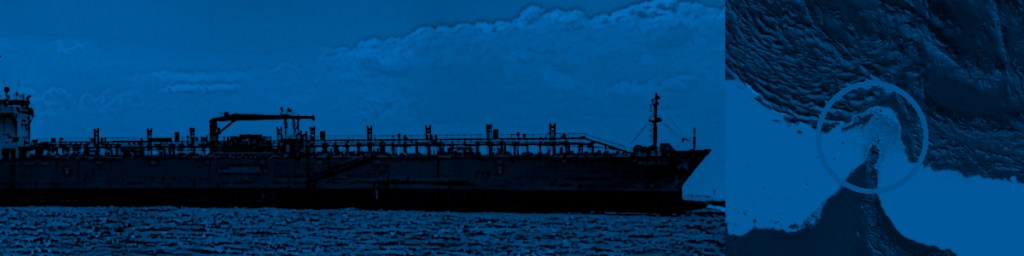
The Iranians then established a new mode of operations for the Strait of Hormuz, which is the gateway into and out of the Persian Gulf. The new model requires payment of ordinary transit fees to Iran and splits the administration of the Strait exclusively between Iran and Oman. The new model remains outside of American influence and control.
Iran then declared the Strait of Hormuz closed to nations that remain hostile to Iran. Many large sea vessels, including oil and gas tankers, became stranded in the Gulf. Other vessels, travelling to the Gulf, turned away before reaching their original destination.
This single act is slowly grinding away at multiple western economies, most notably causing the price of petrol, diesel, and jet fuel to steadily increase. Which in turn is raising the cost of living to new heights for ordinary people living in western countries like the United States, Canada, Australia, New Zealand, and much of Europe.
The domestic problems that arise from upwardly spiralling household expenses may well cost western governments their political power at home as Americans and Australians, amongst others, turn against the governing parties during upcoming elections.
A NEW DAY
In sum, American power is now subject to fixed limits. The US can no longer do what it wants, whenever it wants to. The facts on the ground within Ukraine and the Persian Gulf attest to this new reality. Russian troops will soon secure the Donbass, a key objective of the special military operation. And the new operational arrangements within the Strait of Hormuz continue to boost Iranian national revenue whilst concurrently increasing household costs for the domestic populations of nations hostile to Iran.
The United States can no longer dominate every nation through aerial bombing campaigns, political assassinations, and economic sieges. American mil-tech is no longer superior to the indigenous mil-tech produced by the nations it attacks, as the 2026 war with Iran clearly demonstrates. And the American preference for the use of force within international relations is now discredited as unworkable. The unipolar moment is over.

Author | Keith Salter
ACKNOWLEDGEMENTS
7NEWS | Sunrise. Inflation could hit 7% as oil prices threaten to double. YouTube (no embeds or links allowed). 28-07-2026.
Al Jazeera staff and AP. Iraq says September 30 withdrawal deadline for US-lead coalition ‘final’. Al Jazeera. 12-08-2026.
Al Mayadeen English. Tanker hit by projectile off Oman, engine room disabled. Al Mayadeen. 25-08-2026.
Bahreini, Ali. Minab: When the world’s most precise missile chose a classroom. Al Jazeera. 15-03-2026.
Bartlett, Eva. What I’ve seen of Ukraine’s war crimes against civilians in the Donbass over the years. In Gaza and beyond. 10-08-2022.
Berger, John. Ways of seeing. 1972.
BRICS. Web | infobrics.org
Cohen, Stephen F. War with Russia? From Putin & Ukraine to Trump & Russiagate. 2019.
Dobbins, James, et al. Extending Russia: competing from advantageous ground. RAND Corporation. 2019.
Duggal, Hanna and Alia Chughtai. ‘Everything changed’: The human cost of 25 years of US wars. Al Jazeera. 11-09-2026.
Editorial. Origins of special military operation: history of Ukraine conflict. Sputnik International. 19-09-2025.
Escobar, Pepe. Raging twenties. 2020/21.
Fisk, Robert. The great war for civilisation. 2007. See chapters Afghanistan & Iraq.
Johnson, Larry C. The long road in, and the short way out: how the West built Ukraine into a weapon against Russia. Sonar21. 10-09-2026.
Johnson, Larry C. Nodes, not poles: Why the new geoeconomic order is multinodal, not multipolar. Sonar21. 27-08-2026.
Lancaster, Patrick. Journalist who travelled to Donbass. He’s on YouTube.
Lauria, Joe. Using Ukraine since 1948. Consortium News. 10-06-2024.
Non-Aligned Movement. The Uganda Chairmanship 2024-2027. Web | nam.go.ug
Parry, Robert. Who’s Telling the ‘Big Lie’ on Ukraine? Consortium News. 08-12-2021. Originally published 02-09-2014.
Power, John. Oil prices rise as attacks dent hopes for Strait of Hormuz reopening. Al Jazeera. 12-08-2026.
Saunders, Frances Stonor. Modern art was a CIA ‘weapon.’ Independent. 22-10-1995.
Saunders, Frances Stonor. Who paid the piper? The CIA and the cultural cold war. 1999.
Stockwell, John. In search of enemies. 1978.
Talbot, David. The devil’s chessboard. 2015.
Winks, Robin. Cloak and gown. 1987.
VIDEOS
These videos help explain the rise and fall of the unipolar moment, and include a sneak peek into the emerging multinodal world.
1
The fall of the Berlin Wall
2
President George H.W. Bush announces
Persian Gulf War 1-16-91
3
News August 24, 1991 – ABC News Special Report
on Soviet coup aftermath
4
Madeleine Albright full 60 Minutes interview
5
Remembering 9/11, minute by minute
6
From 2003: Colin Powell addresses
United Nations Security Council on Iraq
7
President Bush announces start of Iraq War
8
15 years after Putin’s iconic speech
at Munich Security Conference.
Why is it still relevant?
9
BRICS: The rise of a new global order?
10
F*** the EU: alleged audio of
US diplomat Victoria Nuland swearing
11
Ukraine: the fight for the East
12
4:3 pro-govt activists burn pro-Russian tents;
clashes, efforts to save burning building
13
Burnt alive in Odessa
14
Ukraine’s far right children’s camp:
‘I want to bring up a warrior’
15
Russia attacks Ukraine
16
Russia-Ukraine crisis:
Putin orders military operation in Ukraine
17
Putin begins attack on Ukraine
as US and NATO vow response
18
BRICS wage silent economic war
against Trump’s brinkmanship | WION
19
Minab school strike:
Iran releases photos of ‘criminal’ US troops
allegedly behind deadly attack
20
Iran seeks to impose service fee
on Strait of Hormuz
21
Strait of Hormuz enters a new phase
as Iran moves to impose transit fees
22
Iran Lego video: The cost of one mistake
THANKS FOR VIEWING
Tags | 9/11 attacks | Afghanistan | American | Angola | anti-Russia | Berlin Wall | BRICS | cold war | contest of ideas | cultural cold war | cultural ideology | Cuban Missile Crisis | Donbass | economic siege | forever wars | geopolitics | hegemony | household costs | Iran | Maidan coup | Minab | Munich speech | Nazi | neo-Nazi | Non-Aligned Movement | Odessa | oil price | oil tanker | package of ideas | Persian Gulf | resource theft | rising prices | Russia | sanctions war | Soviet Union | space race | Strait of Hormuz | superpower | Ukraine | unipolar moment | United States | war | weapons of mass destruction | WMD
Curator | Keith Salter

 Punk Human
Leave a comment