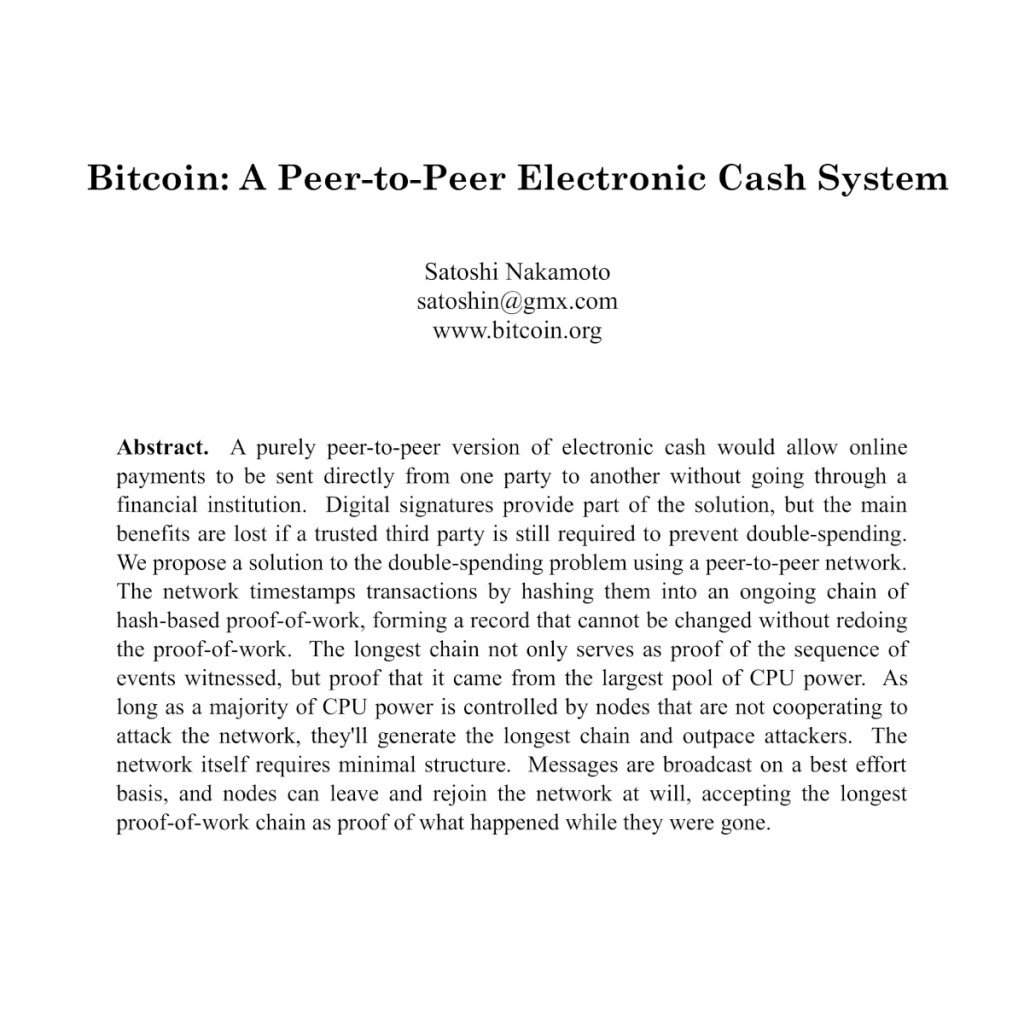
BITCOIN:
A PEER-TO-PEER ELECTRONIC CASH SYSTEM
by Satoshi Nakamoto (2008)
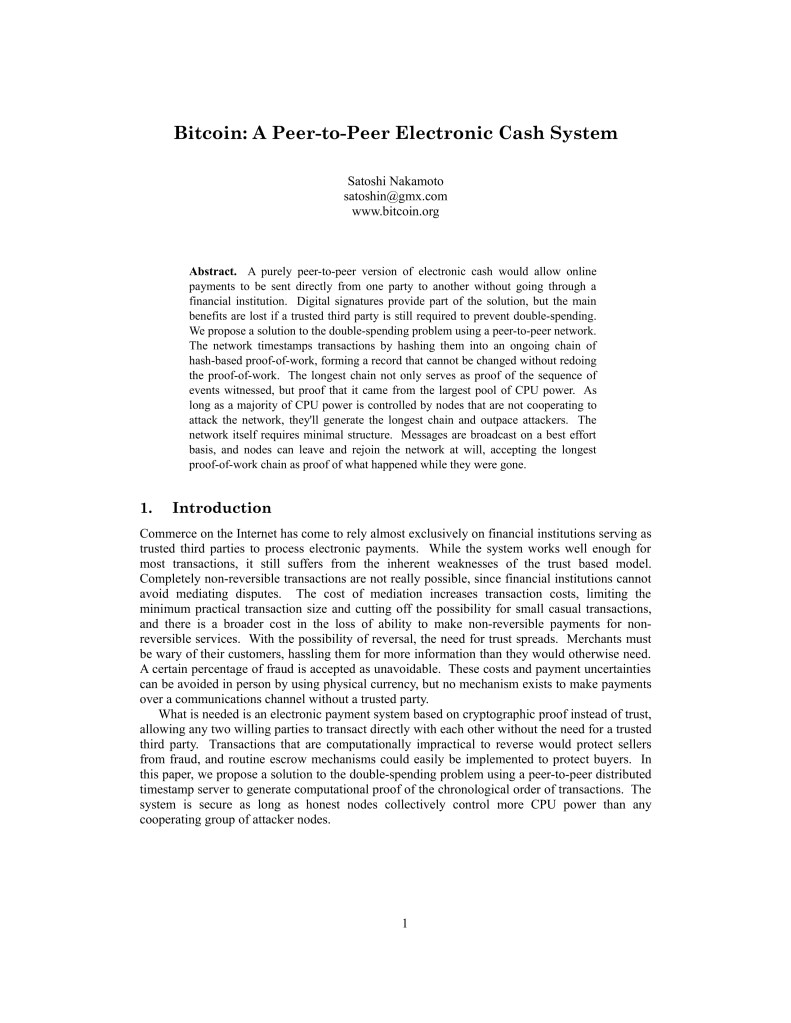
Bitcoin provides a means for person-to-person monetary transactions without the need for the involvement of a financial institution or bank. Bitcoin circumvents the need for a bank to act as a protector against double spending. This is done through the use of network timestamps which are attached to individual transactions combined with the action of hashing, whereby individual transactions are collated into blocks within an overall proof-of-work chain. This chain of blocks cannot be altered or doctored. This is because the CPU power required to defeat the bitcoin network must be greater than the current CPU power that is processing the blocks on the chain. That is an enormous amount of CPU power that could simply be used to mine Bitcoin. Bitcoin operates on a system of nodes, without a central server, and is therefore decentralised. There is no boss or CEO of Bitcoin and people are free spend it or accumulate it as they wish. Bitcoin separates money from the state, is distinct from crypto, protects savings from time erosion, and until proven otherwise, is more likely a discovery than an invention. Non-fiction. 9 pages.
DETAILS:
Title: Bitcoin: a peer-to-peer electronic cash system
Year: 2008
Author: Satoshi Nakamoto
Pages: 9

Book review by Keith Salter

 Punk Human
Leave a comment