MELBOURNE: SHOPS SHUT AS ECONOMY WEAKENS
THE AESTHETICS OF ECONOMIC DECLINE
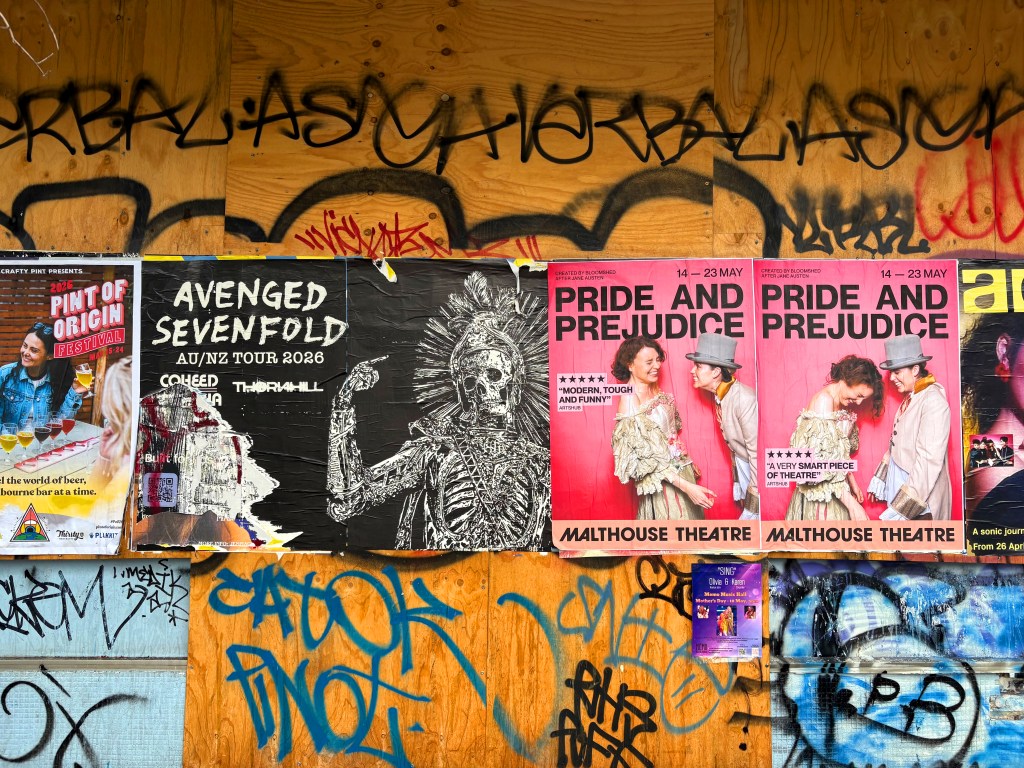
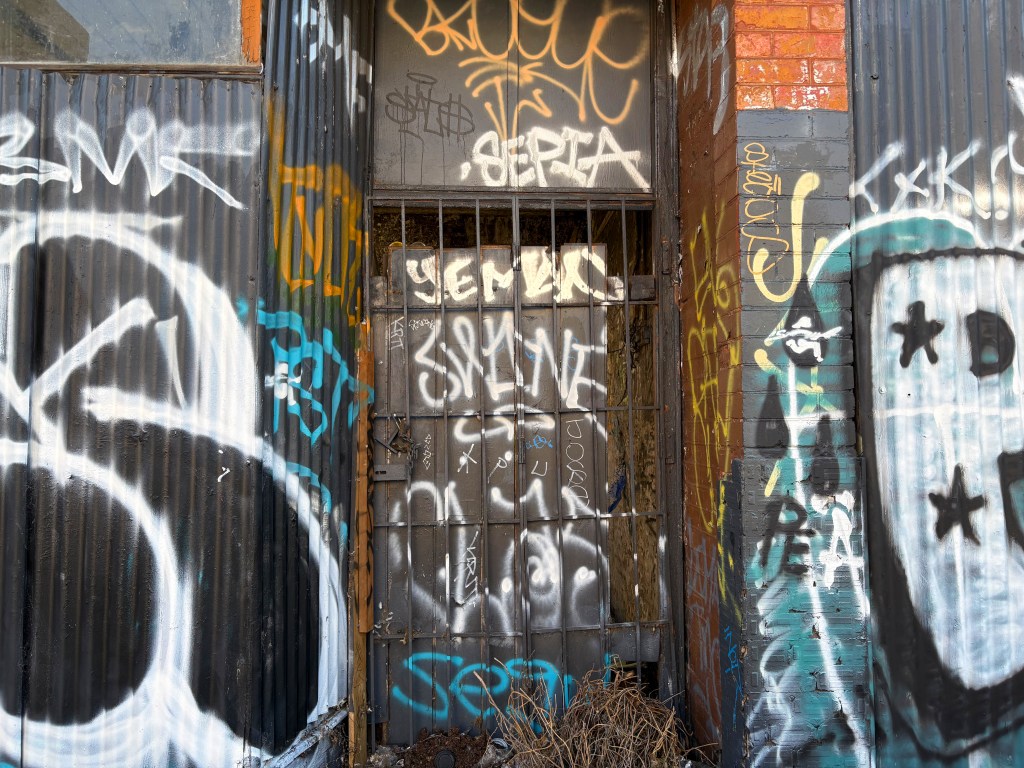
The most noticeable thing about MELBOURNE high streets is the sheer abundance of shops that are empty and remain disused. Many stand out because they are tightly boarded up, the yellow-brown plywood sheets having been carefully fitted together to erase any sign of glass but somehow maintaining a reflective quality, a dull golden glow that recalls the winter sun.
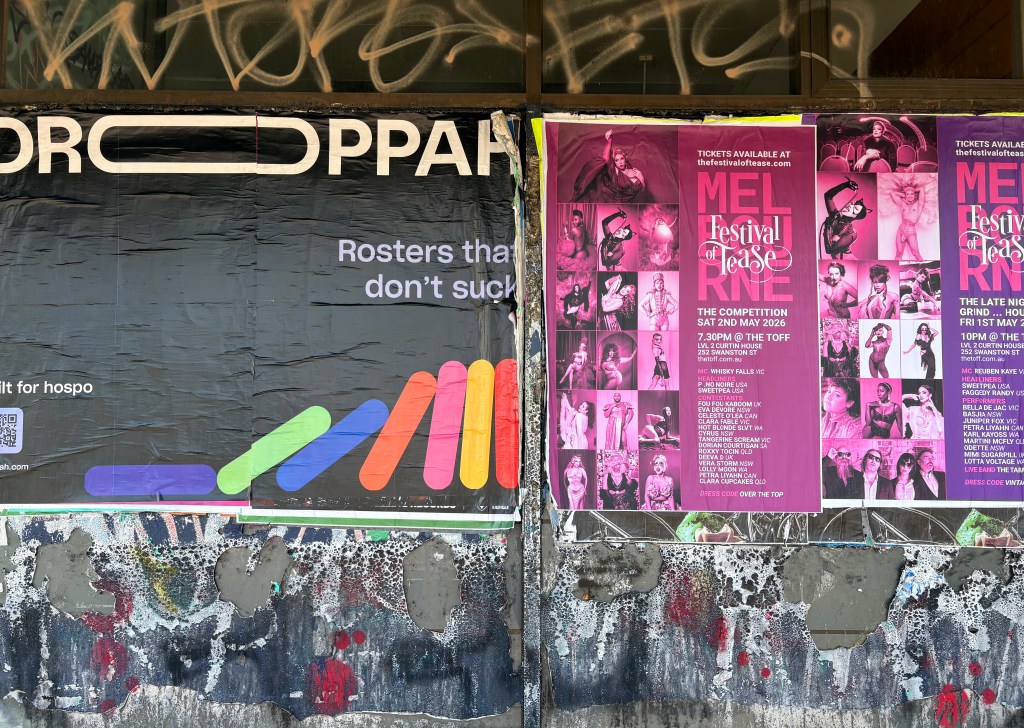
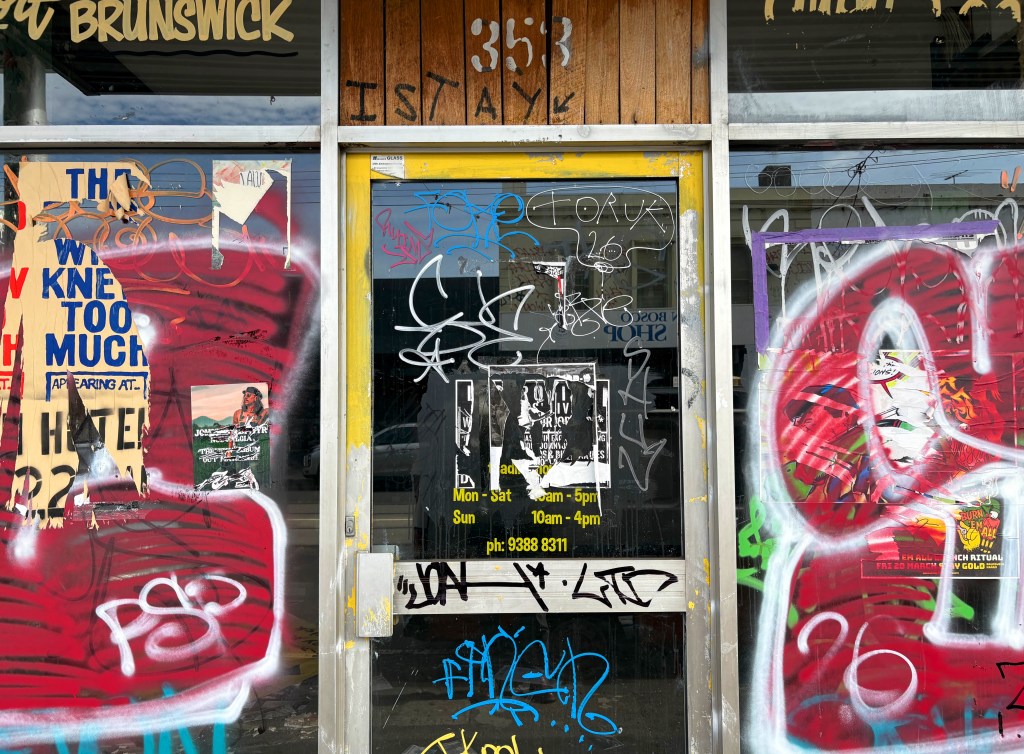
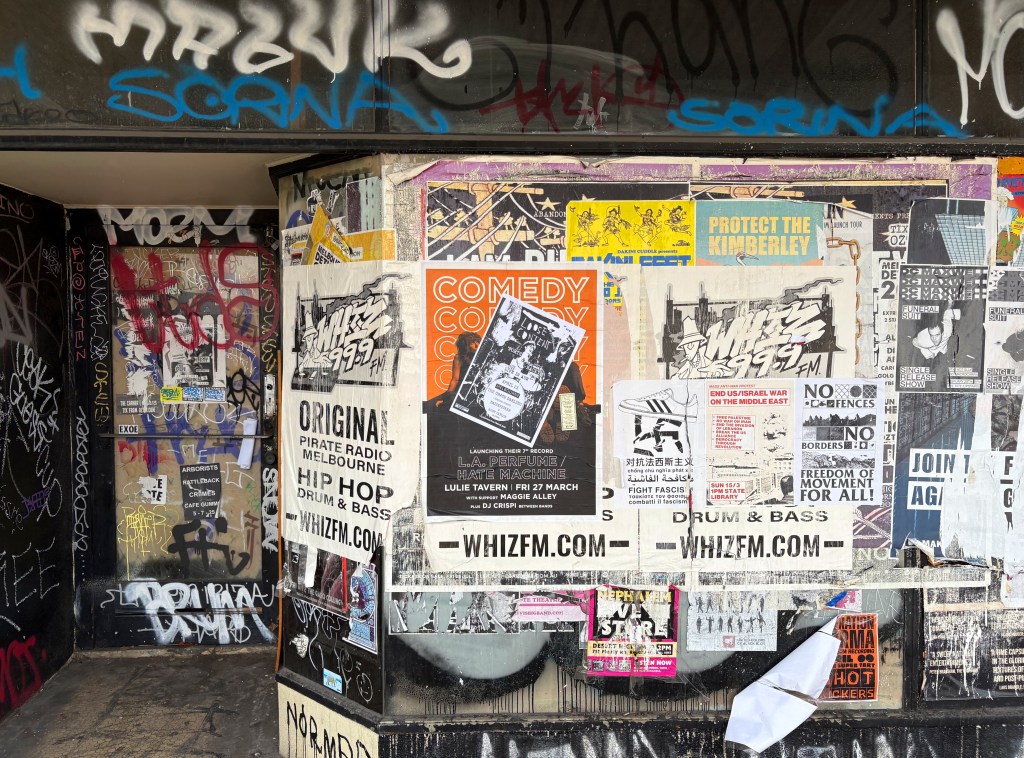
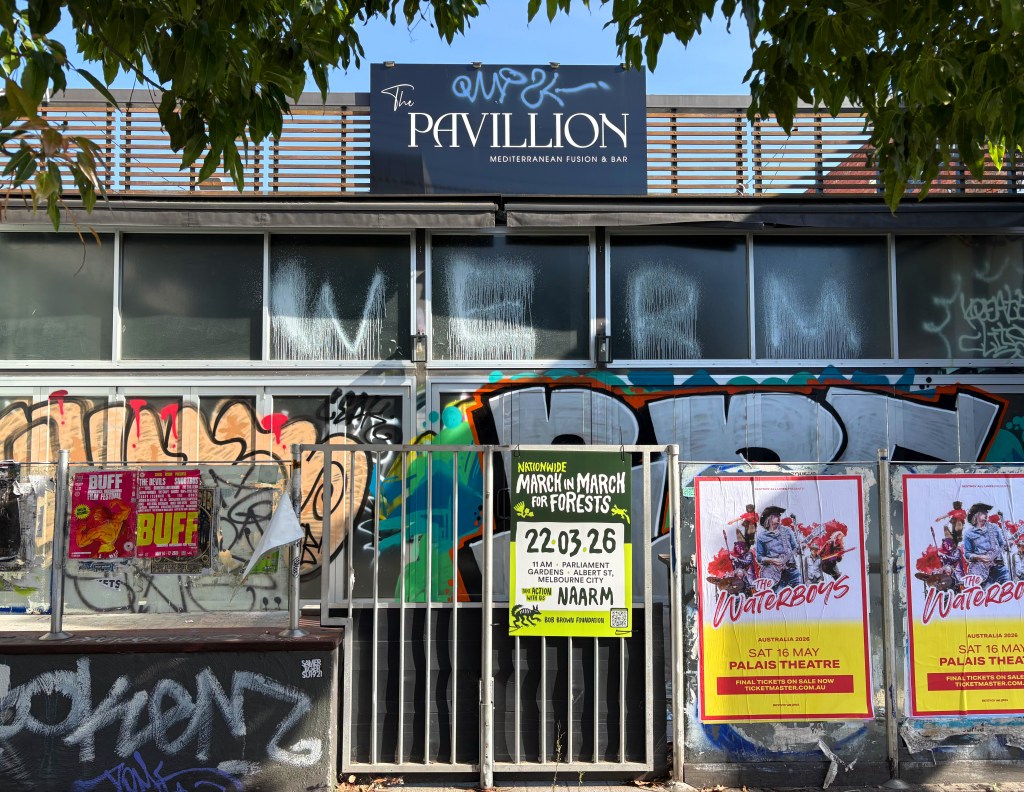
Whether or not a plywood barrier is erected is of no concern for those seeking visual space on the high street. Soon after a shop discontinues business and its tenants have vacated the premises, its exterior will be plastered over with large and small street posters. The large posters are the product of the professional advertisement industry that seeks to gain the attention of car drivers without paying for radio airtime. The small posters mostly belong to local campaign groups who see the territory of the high street as a highly competitive space for expression but one in which they are unwilling to be totally shut out of.
After a while, particularly as new events roll around and old dates expire, the posters are pasted over with newer posters. The application of multiple layers enables a paper crust to form, which expands into the space in front of it causing the façade of the shop to reach into the pedestrian space that exists above the footpath. As many of the crusty layers begin to separate from the underlying surface, they curl outward and seek to touch and graze the passer by.
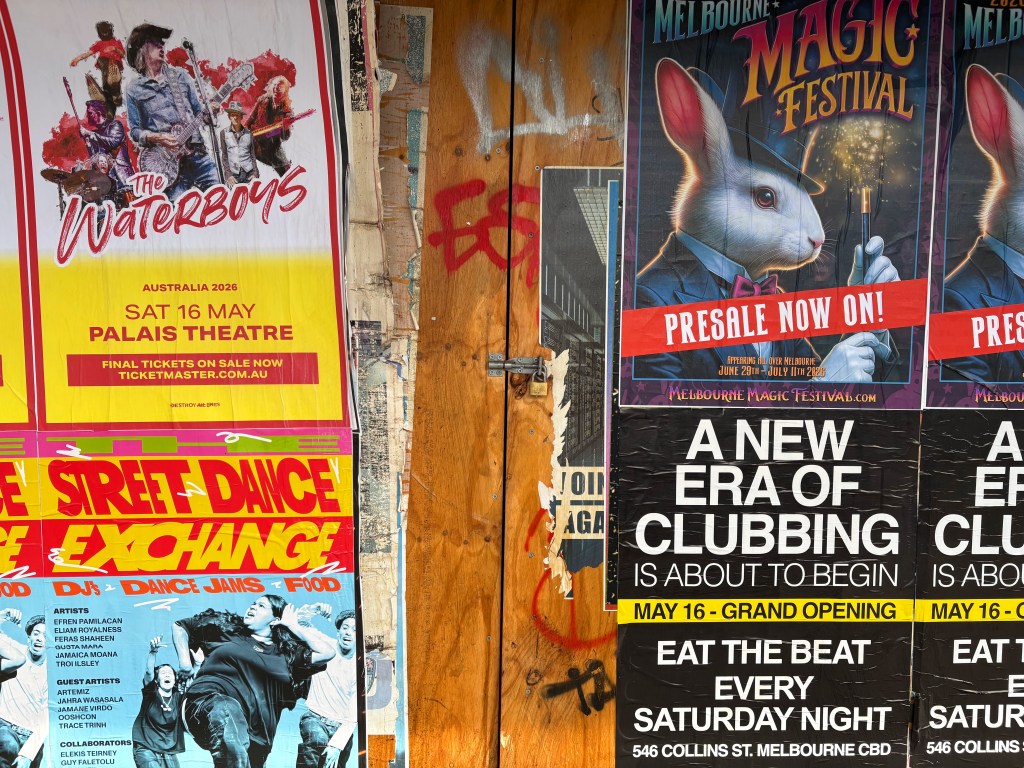
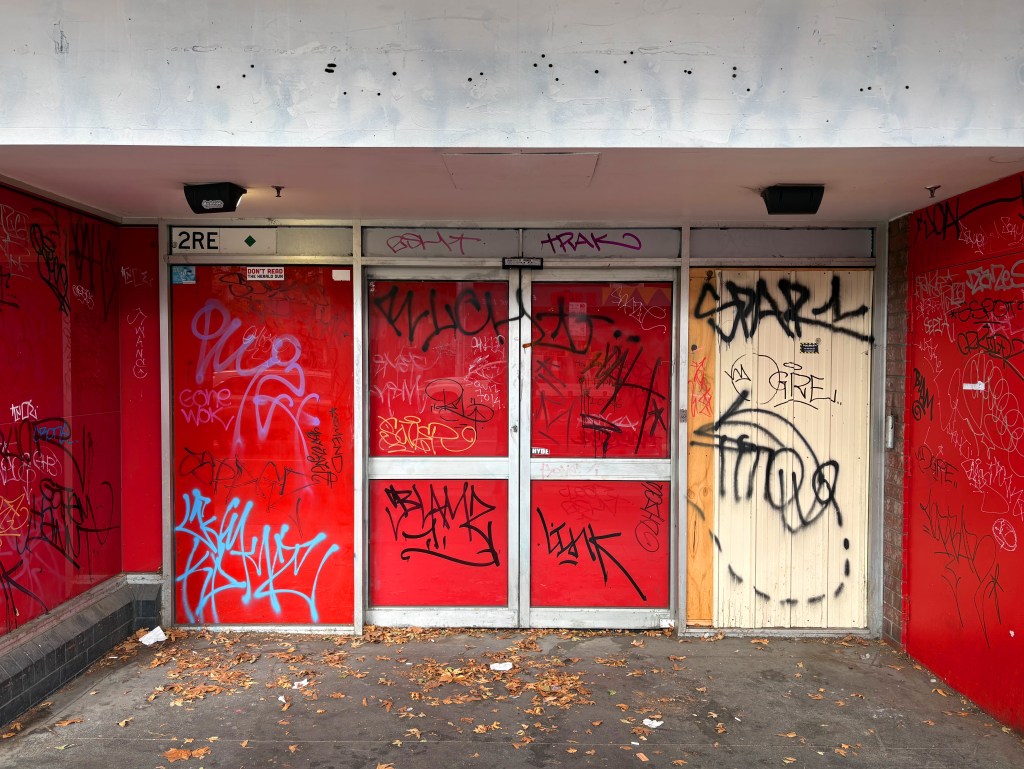
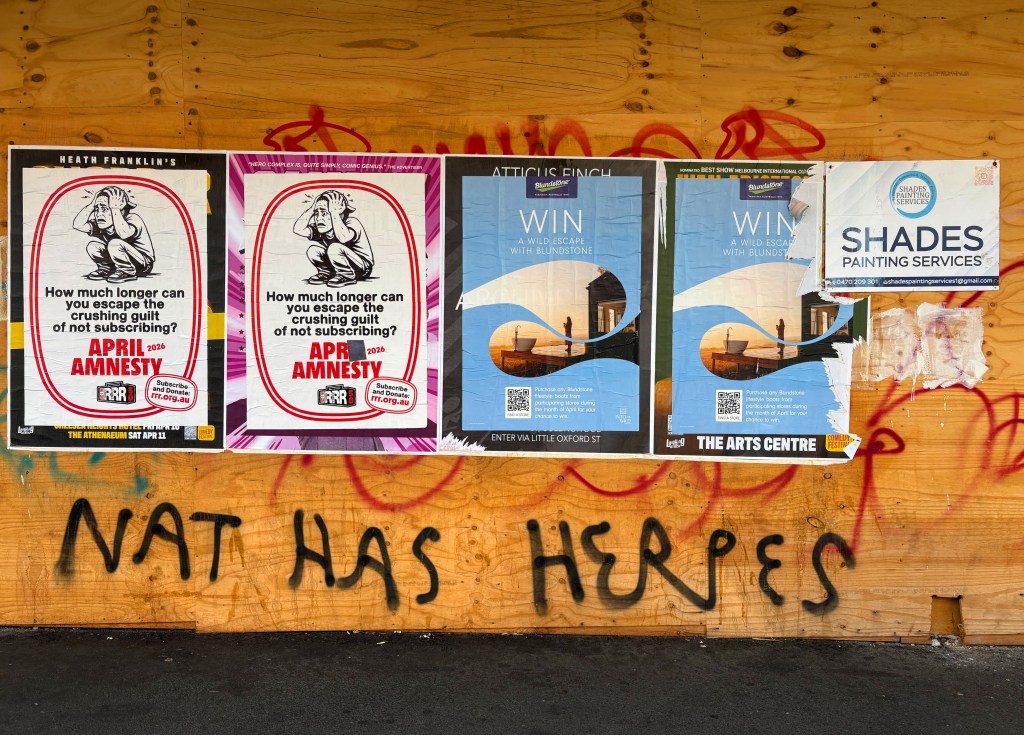
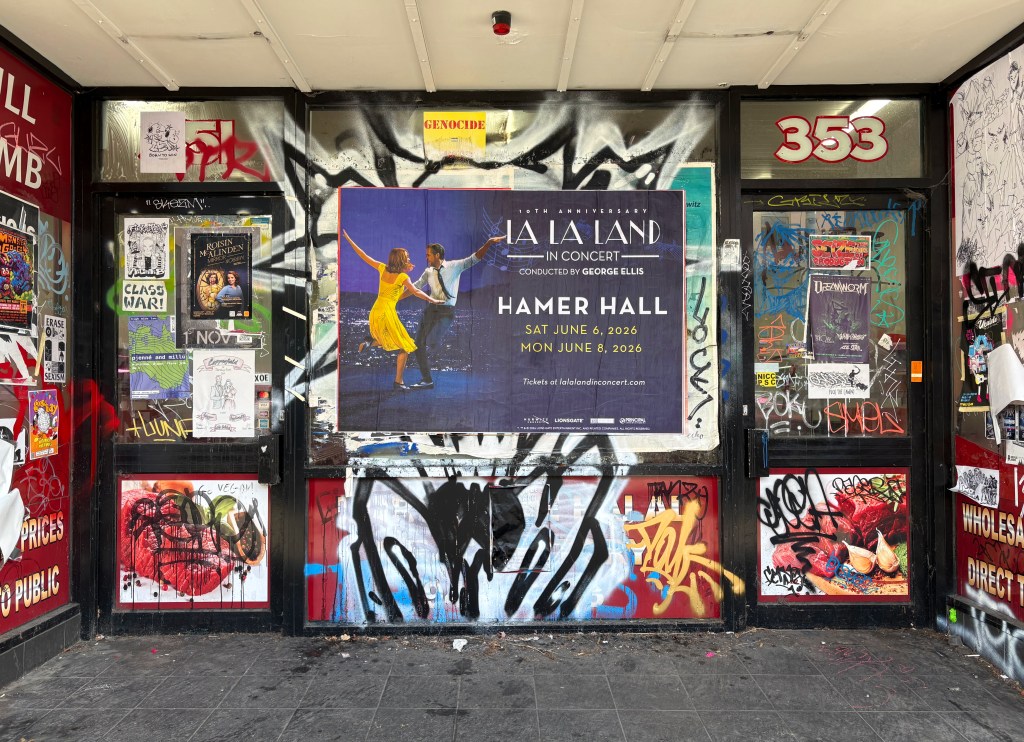
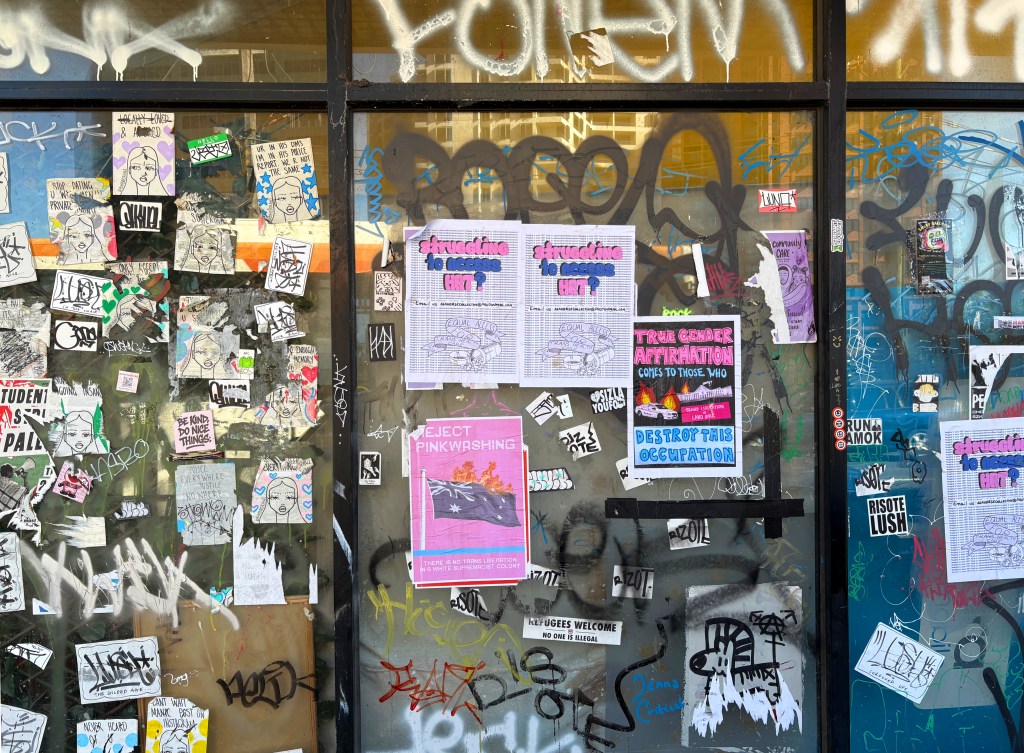
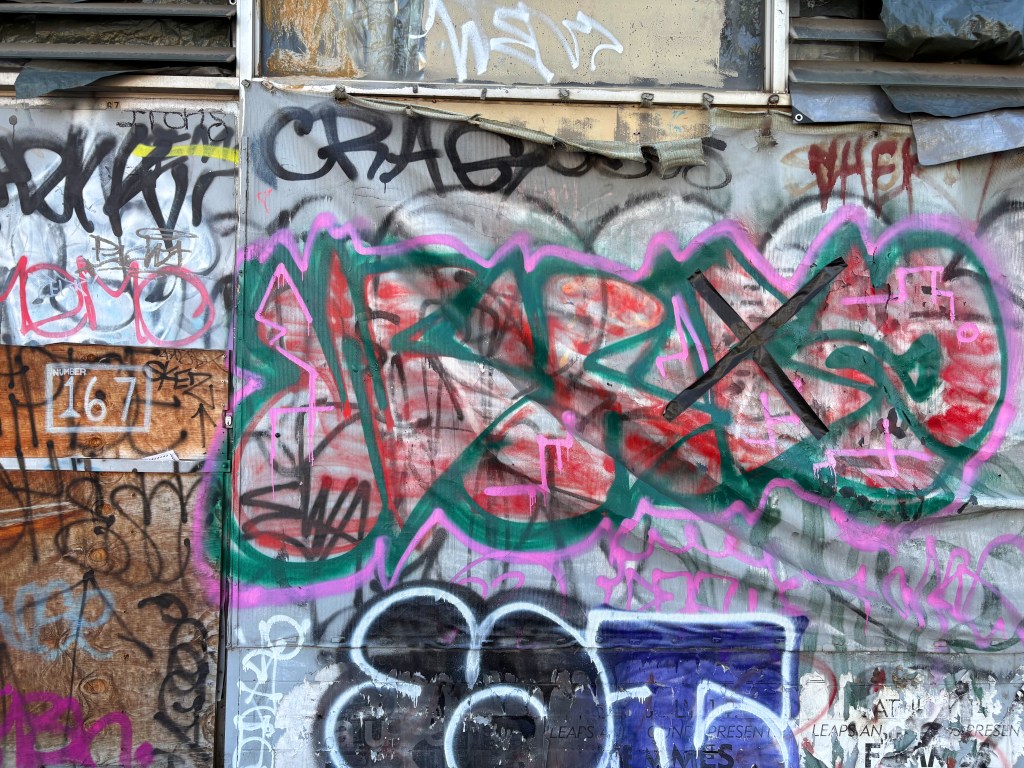
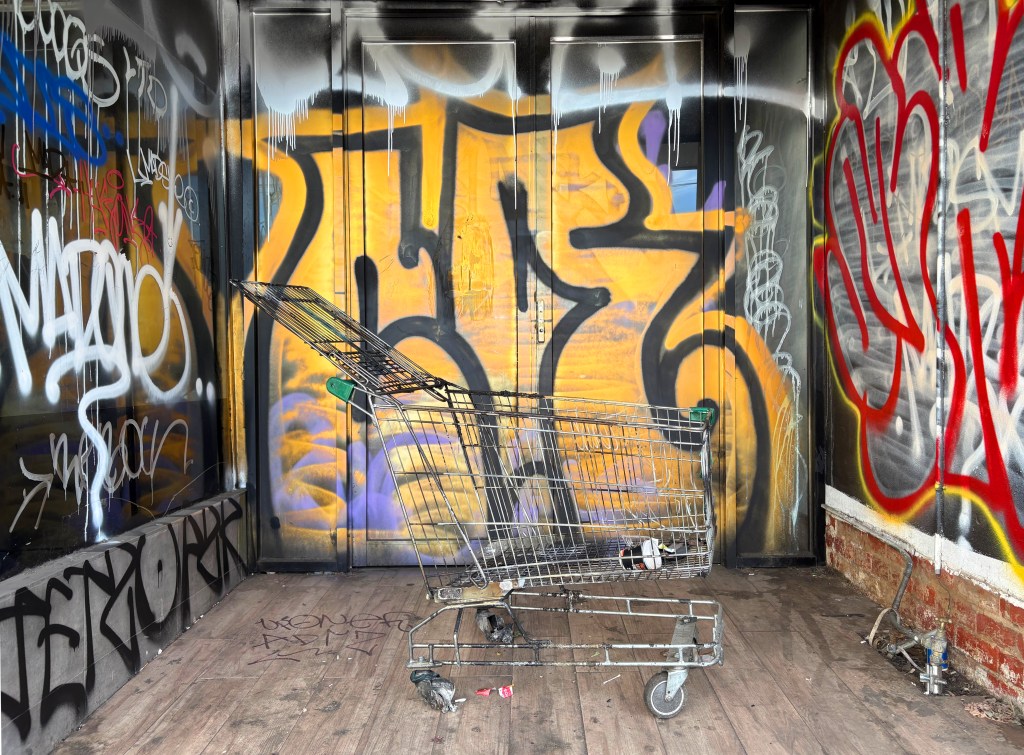
As the street posters curl and stretch their way into the immediate space before them, the unmistakeable presence of hand inscription can be observed. As if in rebuke of this attempt at growth and interaction, graffiti artists have spraypainted and Texta-tagged over and across many of these poster pileups, in what appears to be an effort to curtail the natural action of paper and cornflour glue made subject to the elements. In response, even more posters appear, and reclaim the visual space through a nighttime contest where the contestants, poster paster and graffiti artist, never meet in person.
The graffiti that adorns or pervades MELBOURNE shopfronts is colourful and portrays an intensity that swiftly informs the observer that perhaps there is more to be said. However, like the motor mouth at any social gathering, the graffiti tag speaks volumes but does not say very much. Tag after tag is replicated and reproduced with precision but no message, at least in word formation, can be found here. We must look elsewhere to identify the message.
Our society relies heavily upon the printed word, whether that be a street sign, a council notice, a commemorative plaque, or a business name and contact details that usually appear on glass and masonry and awning. This information is generally presented in the form of block lettering. In stark contrast to this plain custom, graffiti is daubed onto a surface without regard for the cultural norm of reading and writing. That is to say, the textual meaning of the word is far less important that the form it assumes when painted or scribbled over an accumulation of street posters or onto glass panes that display emptiness, including metaphorical emptiness.
Its presence denotes a frustration with the prosaic and a desire to push back against social and environmental decline. This can be determined by the fact that shops that remain in operation and are open for business are spared by the graffiti artist. In this sense, the graffiti artist, through the judicious application of the graffiti tag, highlights the growing decline of our society through a process of selection and deselection.
What we are witnessing is the decline of our modern society. Shown to us as shopfront after shopfront boarded up ostensibly to keep out ordinary people like you and me. The advertising executives have found an advantage in this, and, at times, the graffiti artist imprints their discrete disapproval in the manner of the postage cancellation stamp.
It may be possible to reverse this decline. But we will have to work at it. And that will require us to think differently.

Author + Photos | Keith Salter



Leave a Reply