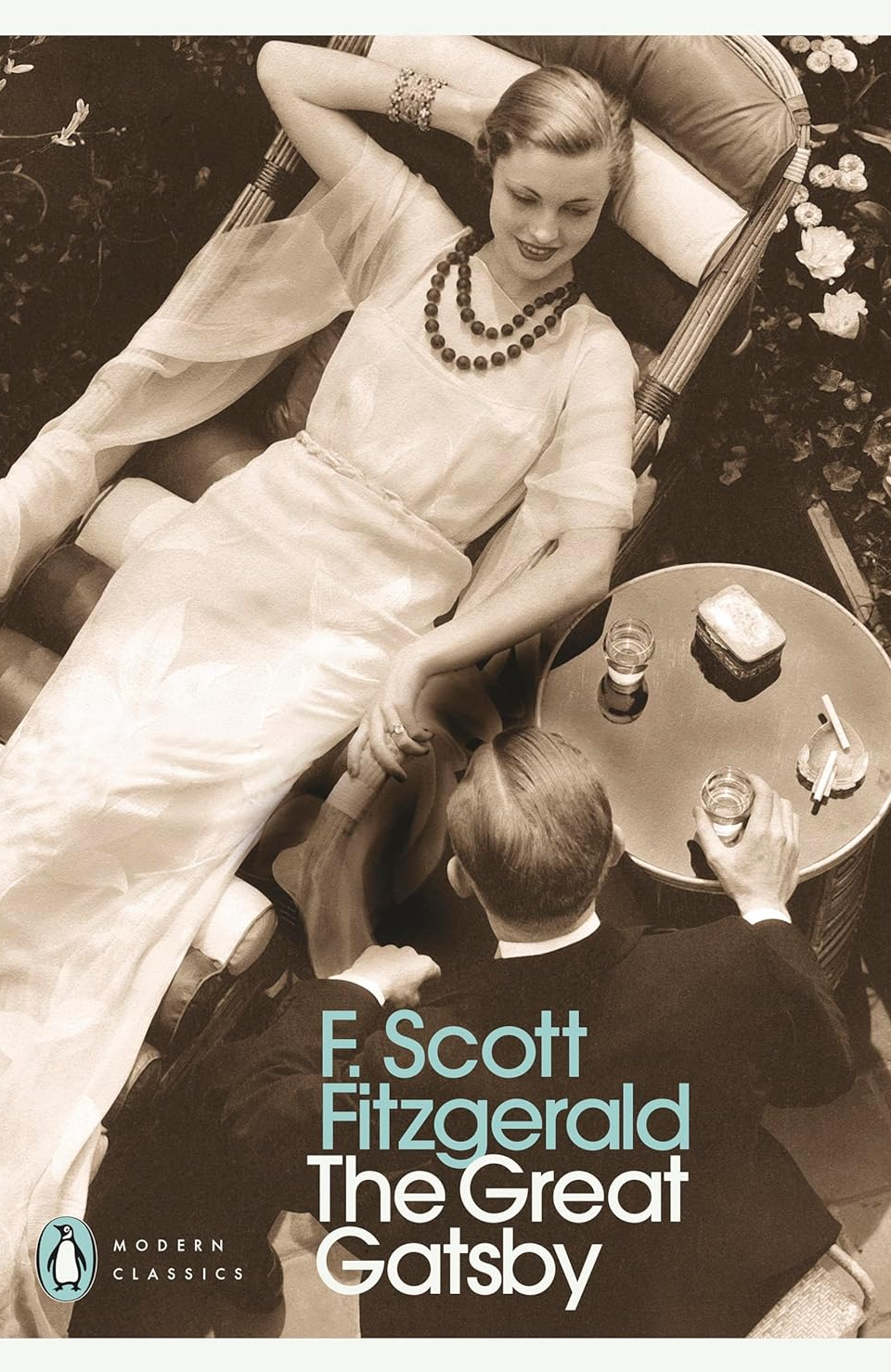
THE GREAT GATSBY
by F. Scott Fitzgerald (1925)
Jay Gatsby is young working class man who enlists in the US army and serves overseas during the Great War. Upon his return Stateside, Gatsby is determined to better himself, and to improve his financial status to a position that he believes will impress Daisy, the young wealthy woman he left behind when he was deployed to France in 1918. As she has moved on, and gotten married, and produced a child from this marriage, things are now a little tricky for Gatsby. But a man who is capable of great combined effort, and who can mix strategic patience with sangfroid, and in the correct measure, might create the conditions on the ground that may in turn accommodate the possibility of success. And in so doing, Gatsby, through much industry and arrangement, and with quite some grace, re-enters the life of Daisy, and soon after, they rekindle their mutual love, and in the most natural way. But secrets have a way of emerging despite our best efforts otherwise and brilliantly laid plans can get scuppered in a heartbeat, and sometimes do, and at those rare times where our secrets and our plans converge or collide with those of others, we can be suddenly thrust out onto the proscenium arch and into the spotlight. Daisy’s husband Tom, who is currently engaged in a lusty affair with Myrtle, eventually cottons onto the situation between his wife and Gatsby. Tom is furious; why should his wife have an affair? When Myrtle’s husband, having recently wised up to Myrtle’s infidelity and ambition, confronts Tom, and demands to know the identity of the man carrying on with his wife, Tom points the finger at Gatsby. It should be said that Gatsby always remained unafraid of both great personal love and class privilege. Gatsby was never indifferent, and he was never a snob. For a brief period, Gatsby had everything, which is perhaps a little more than most of us will ever attain. Nick Carraway will undoubtedly attest to this. Fiction. 148 pages.
DETAILS:
Title: The great Gatsby
Year: 1925
Author: F. Scott Fitzgerald
Pages: 148

Book review by Keith Salter



Leave a Reply