
BOOK REVIEW | MOSTLY RECOMMENDED READING
for the pleasure of reading

Fight club
FIGHT CLUB by Chuck Palahniuk (1996) In a world without hope, what should the hopeless do with themselves? Should they slink off into some corner and slowly expire? Or should they meet, talk, organise, participate, and evolve into something beyond what is? Consider this: if there’s no way left to ascend, perhaps the only way to go is down. If hard work cannot yield results and ambition remains unmet, if love and affection belong solely to the glossy magazines, impossible to capture and experience, if nothing can be changed for the better or even just tweaked to your own temporary…
Keep reading
Trainspotting
TRAINSPOTTING by Irvine Welsh (1993) Mark Renton sees through all the shite that modern society has to offer. The be a good boy and do well in school and you’ll get somewhere good. The get a good university degree or get a good trade and either one will do to get the good job. To earn the good money and then to spend the good money on the good house before filling it with fine expensive products to show off to your mates. Then get married to the good woman and together you and wifey can produce some good wee…
Keep reading
American psycho
AMERICAN PSYCHO by Bret Easton Ellis (1990) Patrick Bateman is seeking an elusive nightclub identified only as Nekenieh. Stuck living in a world of banal daily performance, needless competition, and conspicuous consumption, Bateman attempts to transcend his ordinary existence. Which is not going to be easy given that Bateman is a yuppie and fierce competitor obsessed with owning and displaying status symbols and being seen within the city’s most exclusive restaurants and nightclubs. However, Bateman revels in a challenge, and therefore seemingly determines that he must murder those he deems unworthy. Gory scenes ensue. Modern society and its victims deconstructed.…
Keep reading
Perfidia
PERFIDIA by James Ellroy (2014) Pursuant to the December 1941 attack on Pearl Harbour, Japanese Americans living in the US are declared to be the enemy. In LA, local cops are called upon to round up the Japs. Bloody violence and mayhem ensue. Mass arrests. Internment. Pogroms. Murder. Sergeant Dudley Smith resides within the eye of the storm and has a case to solve. But what can one man do when surrounded by a cesspit of corruption and graft? Schemes to get rich percolate. A declared enemy residing within the US cannot own a home, a business, a land title,…
Keep reading
The crucible
THE CRUCIBLE by Arthur Miller (1953) When a culture of denunciation thoroughly pervades society, the act of pointing the accusatory finger becomes more valuable than any empirical evidence and any exculpatory materials. Witches. Outdoor ceremonies. Night-time flying. Behind the bushes. Accusations. Denunciations. Lies. To bear false witness. Imagine if you could tell fantastic lies and that they would be believed? How quickly would you lie about any person you did not like? And how long before you could just state your unproven and dishonest case and tumble others – good, bad, indifferent – out of your way? You could be…
Keep reading
Running time
RUNNING TIME by Nora Sayre (1982) A critical look at the way Hollywood presented Communists during the 1950s. Hollywood argues that two types of communists exist: foreign and domestic. Foreign communists seek to penetrate without consent the noble boundaries of America. Domestic communists are already present within America and have been bought under an evil influence. Both undoubtedly seek the destruction of the “American way of life” by transforming ordinary people into soulless creatures similar to robots and zombies. Accordingly, the distinct tropes of the Hollywood communist. Walking too fast and at an angle, lurking on street corners, reading newspapers,…
Keep reading
Money
MONEY by Martin Amis (1984) John Self is the quintessential consumer. Always hungry for more and never really satisfied. Out on hunting safari in London and New York, John tours the streets and devours whatever he can find. His daily routine is a merry-go-round of booze, fags, paid-for sex, hardcore pornography, handjobs, and large servings of food. With so much money on tap that he can have whatever he wants, John has no need for restraint. He is unhealthy and overweight, experiencing blackouts and memory loss, and sometimes hits the important women in his life. A highly paid film executive,…
Keep reading
The bonfire of the vanities
THE BONFIRE OF THE VANITIES by Tom Wolfe (1987) The Masters of the Universe work on Wall Street and make millions every year. It is a world in which extreme monetary wealth is derived from doing absolutely nothing useful or productive. Sherman McCoy is one of these rarefied Masters. Sherman is filthy rich and resides in an apartment on Park Avenue with his wife and daughter. All of which might seem to indicate a wondrous life to the casual observer, but Sherman is bored and dissatisfied. Sherman is carrying on with another woman. When the pair are driving through town…
Keep reading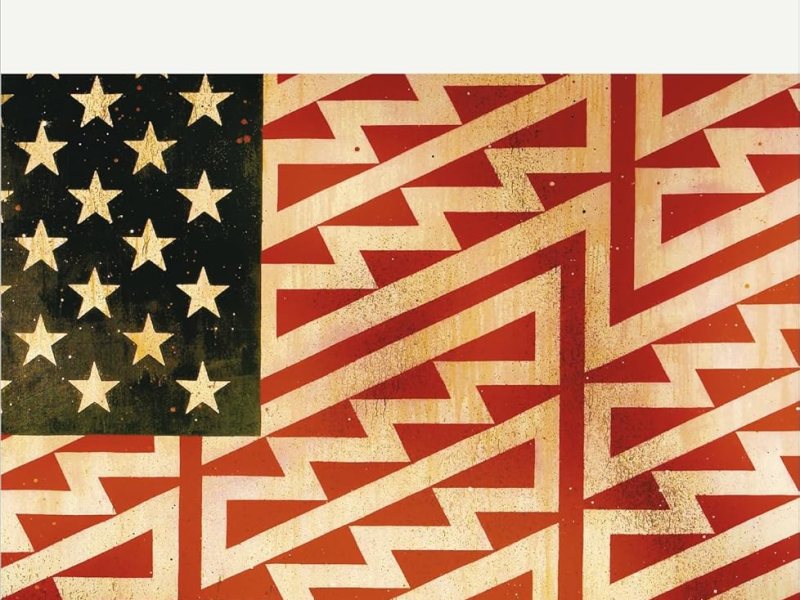
The man in the high castle
THE MAN IN THE HIGH CASTLE by Philip K. Dick (1962) The former United States has been split into three statelets. The Germans control and administer one coast whilst the Japanese do the same on the other. In between, a rump Pacific States of America remains. This scenario arose due to the outcome of the Second World War, which observed the Axis powers defeat the Allied forces. The American rump is not a utopia and barely suffices as a refuge. In due course, America and Americans are gradually being colonised. A new world to emigrate to fails to emerge. Within…
Keep reading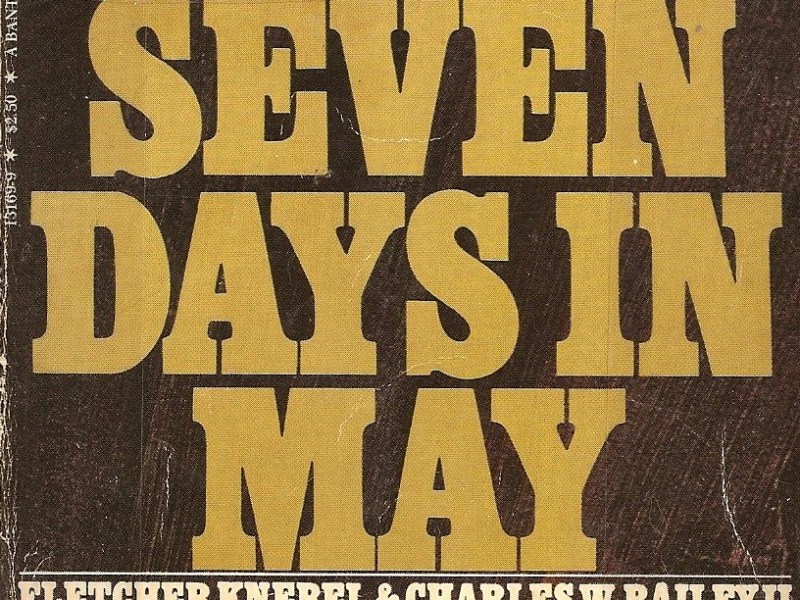
Seven days in May
SEVEN DAYS IN MAY by Fletcher Knebel & Charles W. Bailey II (1962) Set in the early 1970s, the prospect of an impending nuclear disarmament treaty between the USA and Russia has failed to convince a cabal of senior US military brass. They argue that Russia cannot be trusted to disarm. However, the US President is determined to press ahead with the treaty, seeing it as the best opportunity in a generation to reduce the number of nuclear warheads on both sides of the Atlantic. Irreconcilable differences. Deception and skulduggery. A Preakness betting pool. The combination of pollies, brass, and…
Keep reading
Cat’s cradle
CAT’S CRADLE by Kurt Vonnegut (1963) Ice-nine has the power freeze water in an instant. It does this by causing water molecules to “stack and lock” in a manner that would cause great oceans to seize in place if contact occurred. Just one drop, outside of a controlled environment, may be enough to exterminate all earthly life. Needless to say, Ice-nine is a weapon of mass destruction. The product of a military-industrial dream project, Ice-nine was first invented or discovered to eliminate mud on the battlefield, and to counter the sludge and slop experienced during amphibious landings. But then the…
Keep reading
The paranoid style in American politics
THE PARANOID STYLE IN AMERICAN POLITICS by Richard Hofstadter (1964) A concise essay that plainly defines the paranoid style which may be unique to American culture. The paranoid style is a longstanding and recurring mode of expression. When enacted, it usually refers to a conspiracy of an enormous scale and is soon followed by a public cry to seek out the conspirators. The conspiracy itself is only vaguely or partly described. Therefore, we must urgently attend to the business of apprehending the conspirators before gaining their knowledge! The paranoid style relies upon a “curious leap of imagination” when in the…
Keep reading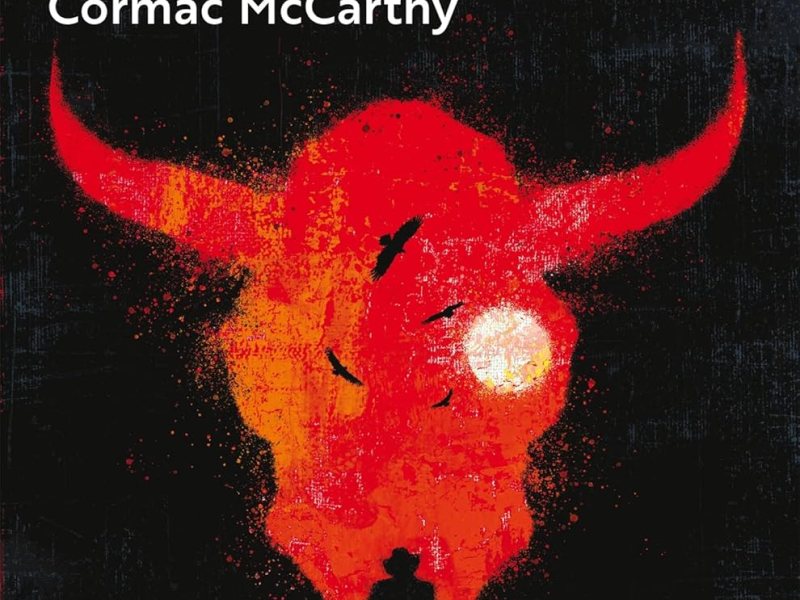
Blood meridian
BLOOD MERIDIAN by Cormac McCarthy (1985) A blood soaked journey down into the dark murderous depths of America’s black soul. Where the sanctity of man is no more and likely never was. The Kid, walking away from nothing and perhaps to nothing still, is apprenticed to a roving band of scalphunters who traverse the sandy deserts of Texas and northern Mexico to claim their bloody receipts and thereby enrich themselves. Hot desert sun, scarce water, lizards eyeballing, wolves trailing, little trust shared amongst this touring party, but they remain united against a common enemy. Which is pretty much everyone they…
Keep reading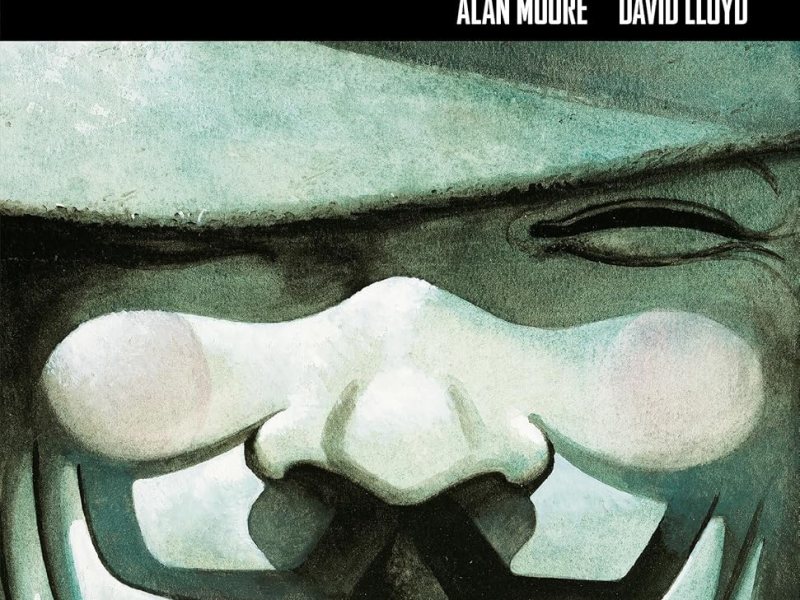
V for vendetta
V FOR VENDETTA by Alan Moore & David Lloyd (1988/89) There are many things that have since been forgotten about those terrible years. We had to forget just to be able to move freely into the future. But back then, when the country was on the brink, and hard choices had to be made, we did what we had to do. We rounded up the immigrants and the homosexuals and locked them away. We used Larkhill Resettlement Camp to do our very worst. We performed biological experiments on the prisoners, and they died. Some went rather quickly, a small mercy…
Keep reading
The handmaid’s tale
THE HANDMAID’S TALE by Margaret Atwood (1985) The Republic of Gilead has somehow managed to avoid the severe radiation exposure that has beset whatever lies beyond its walls. Its governance is totalitarian, and its citizens are expected to believe in its history and causes, or at least they must perform the various social rituals convincingly. Moreover, Gilead is a highly stratified society where a small and powerful minority of men and women, the upper class, exploit the wider population. Its salient feature is that young working class women must “bear fruit” for the republic, which in plain language amounts to…
Keep reading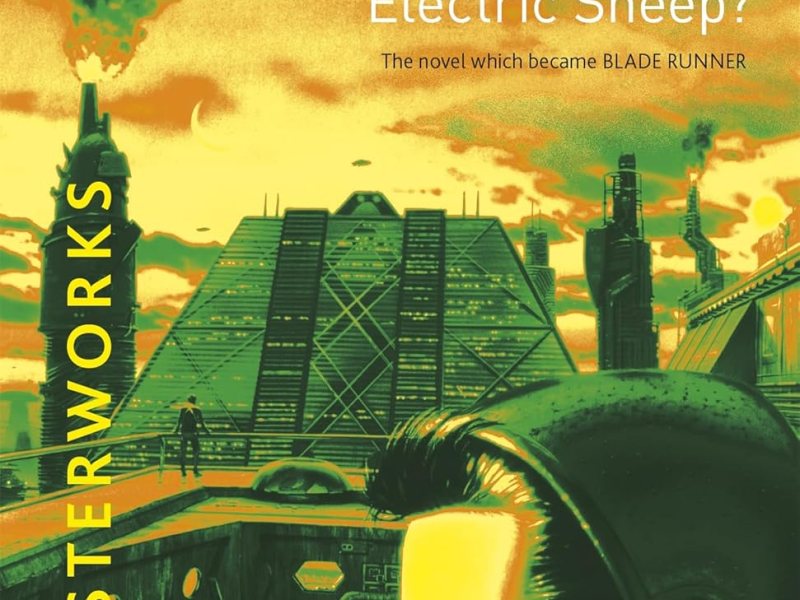
Do androids dream of electric sheep?
DO ANDROIDS DREAM OF ELECTRIC SHEEP? by Philip K. Dick (1968) A terrible war has left Earth in a desperate state. Ruins and ‘kipple’ are everywhere. Many of the survivors have fled to a colony on Mars. Others, like Rick Deckard, remain behind on Earth. Rick works as a bounty hunter who pursues androids for a living. Once subservient robots, these androids have developed human-like qualities and now wish to live freely amongst the humans. But the humans in power will not let them do this. Rather, these androids are to be ‘retired.’ And that’s where Rick Deckard comes into…
Keep reading
Extending Russia
EXTENDING RUSSIA: COMPETING FROM ADVANTAGEOUS GROUND by James Dobbins et al | Published by RAND Corporation (2019) This work assumes the absence of détente and clearly views Russia in its current form as an enemy of the United States. It contains a smorgasbord of options for the US government and military to employ against Russia. The central theme is one of overextending Russia in a manner that would render the country and nation vulnerable to US predation and attack. Each chapter represents a different methodology for weakening Russia. Subsections apply the methodology to a specific target area. The fate of…
Keep reading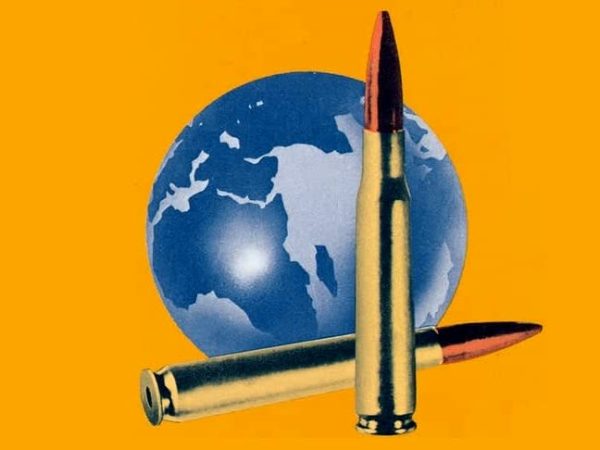
In search of enemies
IN SEARCH OF ENEMIES by John Stockwell (1978) This book describes in detail CIA “involvement” in Angola. The author is a former CIA case officer who served in Angola during this time (mid 1970s). His analysis is oftentimes brutal and includes numerous real-life examples. As the cold war unfolded in various places around the world, the CIA sought to bring about a suitable (to the CIA) regime change in Angola. However, as it turned out, lots of money and some foreign mercenaries would not be enough to defeat the local MPLA forces who were joined by 12,000+ Cuban regular soldiers…
Keep reading
The quiet American
THE QUIET AMERICAN by Graham Greene (1955) Alden Pyle is an American stationed in Vietnam in the early 1950s. As the French are being gradually defeated by both nationalists and communists, Pyle sees an opportunity for himself and America. It is Pyle’s mission to realise a Third Force through financial support and military training within Vietnam. His precise role is to import and distribute plastic to the Third Force, whom in turn, transform the plastic into explosives before bombing a public square. Thomas Fowler is an English foreign correspondent working out of Vietnam and is covering the anti-colonial war that…
Keep reading
Pedagogy of the oppressed
PEDAGOGY OF THE OPPRESSED by Paulo Freire (1970) We inhabit a world and society that dehumanises the oppressed. To reach a state of humanisation, one must become aware of their own incompletion, and then strive toward completion. An education process that encompasses everyday reality is necessary here. Hence, the model of education must be changed from the banking method with its deposits of abstract data into the mind of the student, to the problem-posing method. Whereby reality is perceived not as a static and frozen state of affairs nor a magical realm beyond comprehension and discernment, but rather, a problem…
Keep reading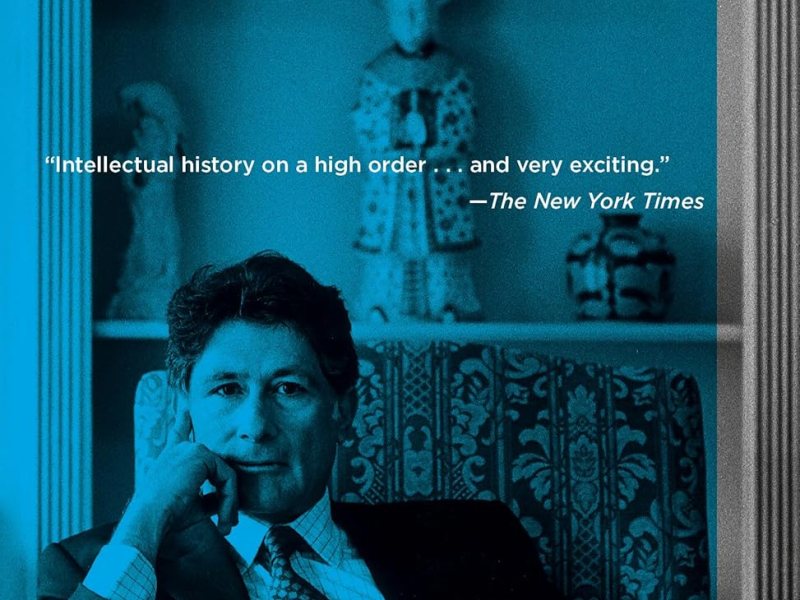
Orientalism
ORIENTALISM by Edward Said (1978) An examination of the orientalist fetish that can be found within the library, museum, and the role of the curator. The organisation and arrangement of information within the library, and the same regarding the artefact within the museum, as a means to communicate the interloper’s view of the “lesser” culture. The curation of oriental cultural artefacts that create or enhance a narrative about the oriental culture which largely affirms the interloper’s own society as advanced and superior. The practice of writing about a culture after reading the works of others, rather than, seeing and experiencing…
Keep reading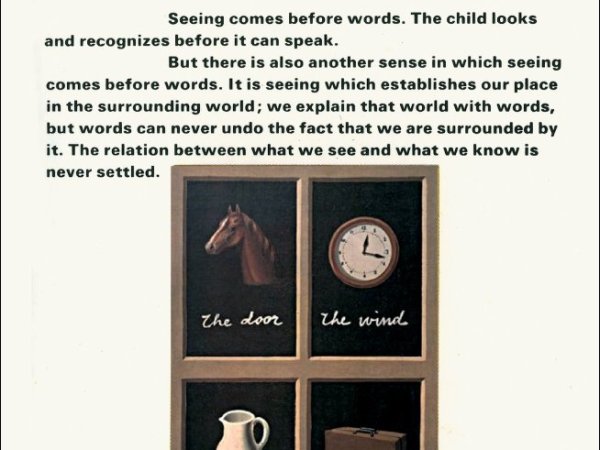
Ways of seeing
WAYS OF SEEING by John Berger (1972) A class-conscious analysis of the visual image and its purpose and deployment within our modern society. Encompasses a step-by-step approach to understanding art history, film studies, and visual communication. A practical survey that utilises artworks and magazine advertisements to illustrate its points and augment its argument. The visual image as an instrument to reinforce hegemony. The work of art as a means to convey status and lifestyle. The portrait, photograph, or commercial advertisement, that may communicate without the use of spoken or written language. Written for the novice but remains relevant for any…
Keep reading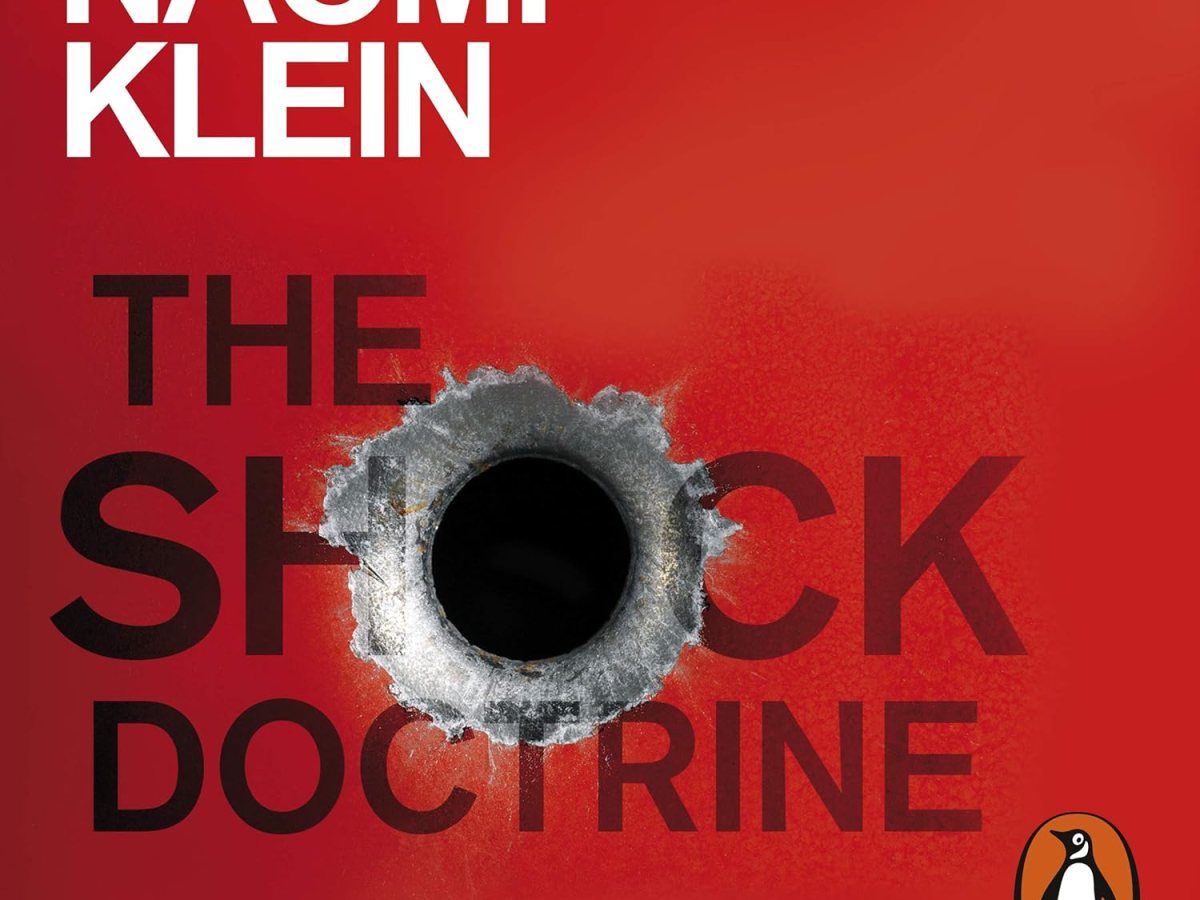
The shock doctrine
THE SHOCK DOCTRINE by Naomi Klein (2007) The shock doctrine is both extremist ideology and cold-blooded strategy. A fundamentalist belief system taught to students at the Chicago School of Economics. A policy and programme of privatisation, deregulation, and wide-ranging cuts to public spending. A transformation of the national economy away from varied local manufacturing and towards single product exports. A political police force to suppress subversion and a disloyal military to orchestrate a coup d’état. Mass murder. The disappeared. Brazil 1964. Uruguay 1973. Chile 1973. Argentina 1976. Entire nations upended. Crisis after crisis. The US reconstruction business. KUBARK manual. An…
Keep reading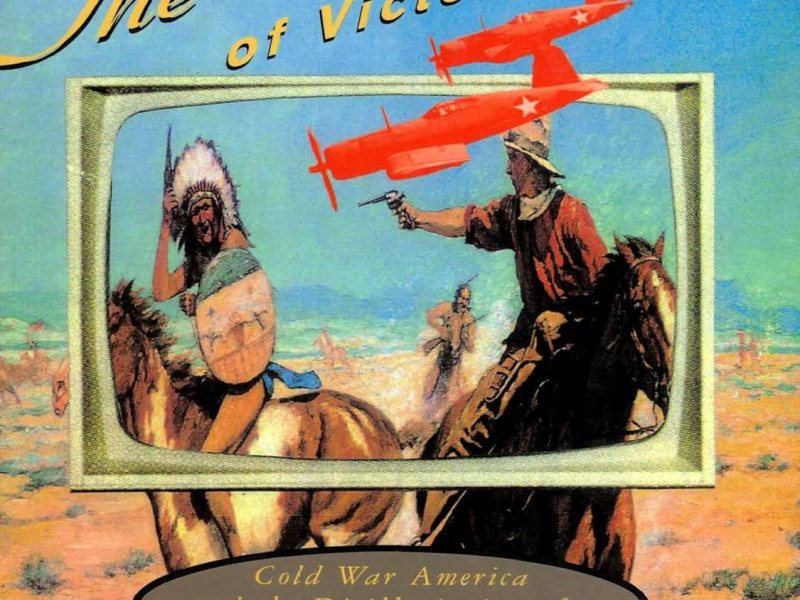
The end of victory culture
THE END OF VICTORY CULTURE by Tom Engelhardt (1996) A robust cultural analysis of America and Americans. The author skilfully unpacks the American narrative through the examination of art, pulp, film, politics, and history. And introduces the discrete concept of enemy-ness as key to understanding American culture. Which can be observed in the consistent American practice of attributing the quality of enemy-ness to much of the world. Also, the origin myth. Native Americans already present. Differentiation between historical winners and losers expressed as cultural traits. Subsequent to WWII, Russian and Chinese allies are transformed into enemies. The American narrative must…
Keep reading
Gunfighter nation
GUNFIGHTER NATION by Richard Slotkin (1992) An extensive examination of American myth and culture with a strong focus on history and film. Describes the myth of the American frontier as a three-stage process that first encompasses separation, then temporary regression into a primitive or natural state, and finally regeneration through violence. See Rambo: First Blood among many others. A frontier war, which is a war of colonial expansion, negates class struggle within the settler colony precisely because there remains land and resources that may be forcibly obtained from beyond the boundaries of the settlement. In short, natives may be robbed,…
Keep reading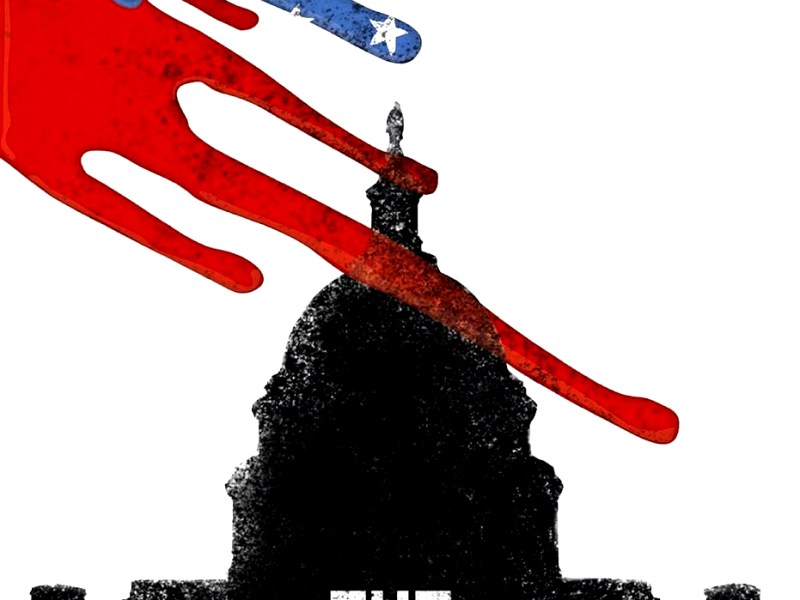
The Manchurian candidate
THE MANCHURIAN CANDIDATE by Richard Condon (1959) What if the perfect assassin was one of us? Devoid of morality, unable to feel fear or concern, ready and prepared to kill on command. Living amongst us, blending in, near invisible, barely detectable, and thoroughly determined to complete any task. What if the controllers of this hidden assassin worked for a nation hostile to our national interests? And are just waiting at the ready to activate the kill asset on command. How would such an assassin be made and who would make him kill? Could prisoners of war be subjected to sophisticated…
Keep reading
Open veins of Latin America
OPEN VEINS OF LATIN AMERICA by Eduardo Galeano (1971) A comprehensive nation by nation history of Latin America. Galeano writes from the perspective of the oppressed and shines a glaring light upon the ransacking of the land and the vicious exploitation of its nations and peoples. Plunder. The aerial scanning, ground extraction, syphoning off, and removal of the continent’s minerals and natural resources by the United States. The Chilean and Argentinian coups are examined in detail. The Chicago School of Economics. Military takeover. Kidnapping. Drugging. Flights offshore. To be disappeared enters the world lexicon. Bicycle silhouettes are painted as remembrance…
Keep reading
The CIA in Hollywood
THE CIA IN HOLLYWOOD by Tricia Jenkins (2012) The collapse of the Soviet Union (CCCP/USSR) that followed the civilian dismantling of the Berlin Wall (November 1989) and the destruction wrecked upon Russia and her population by the implementation of economic shock therapy (see Klein) during the pursuant 90s, ensured that the CIA, and perhaps America, had been left without an easily identifiable enemy. Indeed, with the demise of the Cold War, the CIA would now likely be required to alter their objectives. But alter how, and to what? Noticeably, the post-cold war CIA soon established a public relations department that…
Keep reading
Cloak and gown
CLOAK & GOWN by Robin Winks (1987) An intricate examination of both CIA and its forerunner, the OSS. With a particular focus on the historical recruitment of scholars into the ranks of these clandestine organisations. WWII operations in the European theatre by the OSS. Art looted by Nazis became American war booty and was subsequently shipped Stateside. The destruction of Europe’s enormous library collections. Post-war transformation of OSS into the CIA in 1947. Commander Roscoe Hillenkoetter. Donald Downes. James Jesus Angleton. Kim Philby. The Albanian operation. A CIA preference for Yale graduates. Skull and Bones. The establishment of area studies…
Keep reading
The Godfather in Australia
THE GODFATHER IN AUSTRALIA by Bob Bottom (1979) An uncompromising survey of the Australian underworld. Charting the cultural change that occurred within the Australian crime world from the 1950s onward. Whereby the ‘industry specialist’ was forced out, often through assassination, and an organised entity with cross-industry interests was established in their place. Then the late 1960s saw the beginning of the drug trade in Australia, which was controlled by this same octopus-like entity. Links to the American mafia or Mob are examined and established by documentary evidence in the form of photographs. The July – August 1972 meetings that occurred…
Keep readingSomething went wrong. Please refresh the page and/or try again.

Front covers are included to assist in the identification of books and are utilised solely for the purpose of review. Copyright remains with the publisher and/or artist.
 Punk Human