ART INCORPORATED
by Julian Stallabrass (2004)
Throughout the first cold war (1947-1992), art had been used as a cultural weapon in the struggle between two great powers. On the one hand, Soviet realism pictorially demonstrated the link between the people, their education, and their social and economic progress. On the other, American, and European abstract art attempted to convey a life without boundaries through a rejection of traditional forms. However, once the Berlin Wall was dismantled in November 1989, the first cold war began to reach its climax. For the West, eschewing peace and unity, the role of art would now be transformed. And with the lives of the Soviet peoples in disarray following the economic shock therapy that occurred during the 1990s, westerners and their art gained free reign. Hence, art became the exponent of neoliberal capitalism and the global “free” market. Museums and collecting institutions accepted multi-million-dollar sponsorship deals. These lucrative contracts provided highly exploitative companies with multiple opportunities to greenwash their corporate actions that today are described at best as misdeeds. At the cultural level, art no longer fought for a glorious idea or exposed a long-repressed emotion, rather, art became numb and numbered with a price tag. These often overzealous valuations inflated the worth of museums and assisted wealthy individuals to manifest a tax dodge. Art became defined by the viewer and no longer by its content and limitations. Art therefore became incomprehensible, as critical appraisal and common agreement about the action of art faded away. Non-fiction. 240 pages.
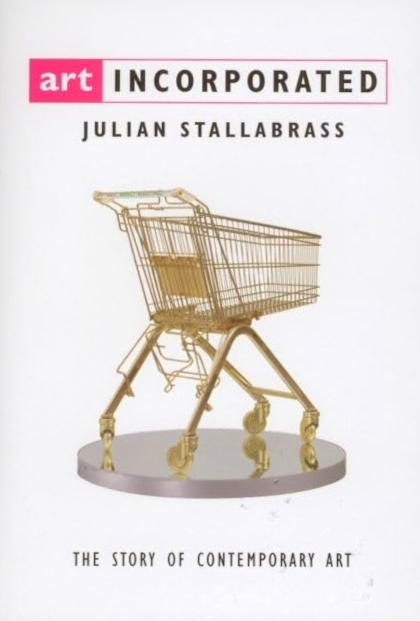
DETAILS:
Title: Art incorporated. The story of contemporary art
Year: 2004
Author: Julian Stallabrass
Pages: 240

Book review by Keith Salter
 Punk Human
Leave a comment