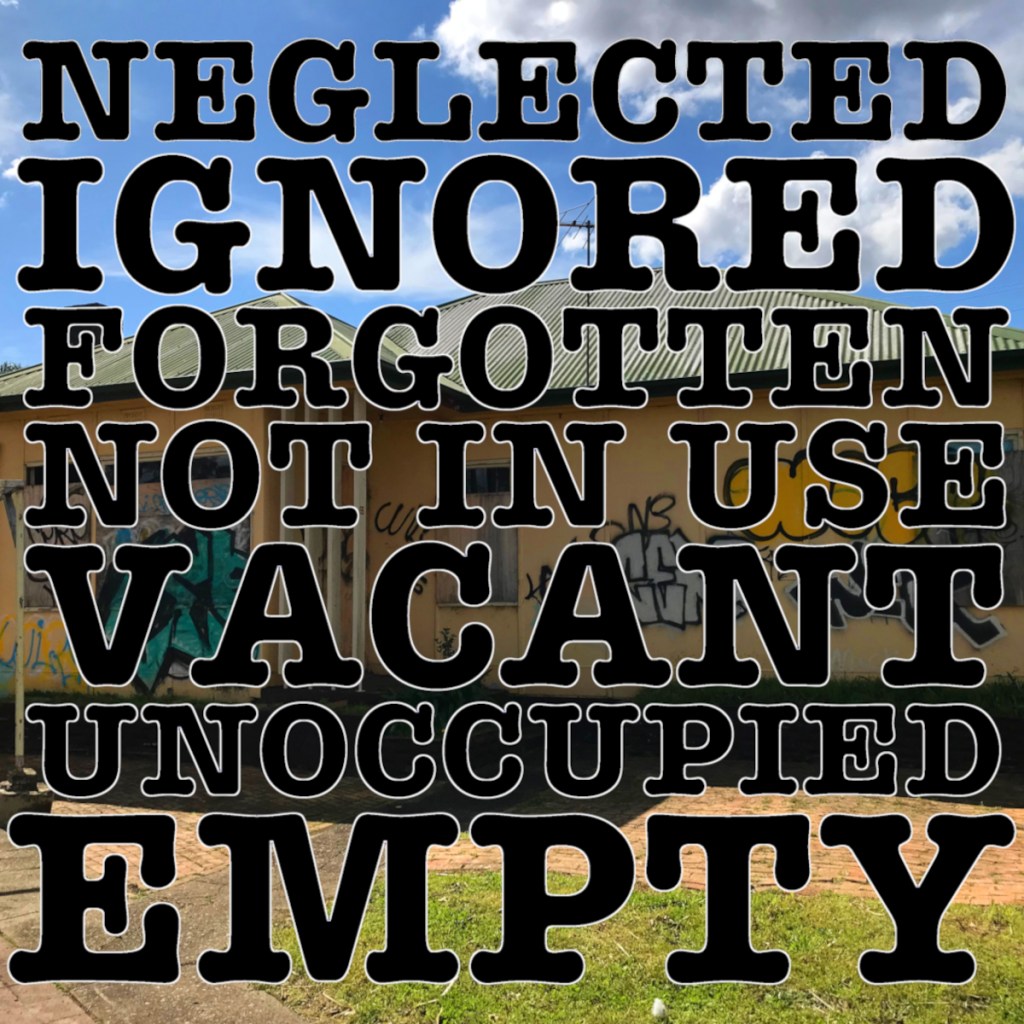
SQUATTERS TURN EMPTY HOUSES INTO HOMES
SQUATTERS RECYCLE EMPTY PROPERTIES
By the mid-1980s poverty had become rampant throughout Australia. As jobs moved overseas and mortgage rates skyrocketed above 15%, many people suffered under this unbearable weight. Some lost their homes and had to start again as renters in a new suburb. Others, overwhelmingly young people under 30, working with a handful of experienced squatters, took control of their destiny and moved themselves into vacant properties in large numbers.
The residential properties had sat empty for years prior to these actions. They stood in forlorn clusters and were therefore highly visible, making them a prominent sight at street level. They gathered dust and grime and sometimes became receptacles for rubbish. The squatters changed all of this for the better when they moved in. Rubbish was removed, frontages were swept, and windows were wiped clean.
Mass squatting observes that there is safety in numbers. That many hands make light work. That good ideas and strategies are often the product of kind spirited group discussion. And that people power is a collective endeavour that requires all hands on deck.
MASS SQUATTING ACTION
Mass squatting became the primary means of long term protest in Sydney during the late 1980s and early 1990s. Whilst somewhat famous – or notorious – mass squats such as the Gunnery (Woolloomooloo) and the Warehouse (Redfern) remained active for many years, others disappeared rather quickly.
But that was to be expected, as many of these short-lived mass squats were planned and organised as public actions to highlight the plight of homelessness within Australia and the sheer lack of viable living arrangements for many people.
A significant aspect of the mass squatting action was designed as spectacle to highlight a serious social problem that both government and charity could not or would not resolve. This type of mass squatting saw banners unfurled from squatted buildings, megaphone commentary delivered from the balconies of squatted properties, and temporary barricades sometimes erected within the properties themselves to discourage random interlopers or intermittent police intrusion.
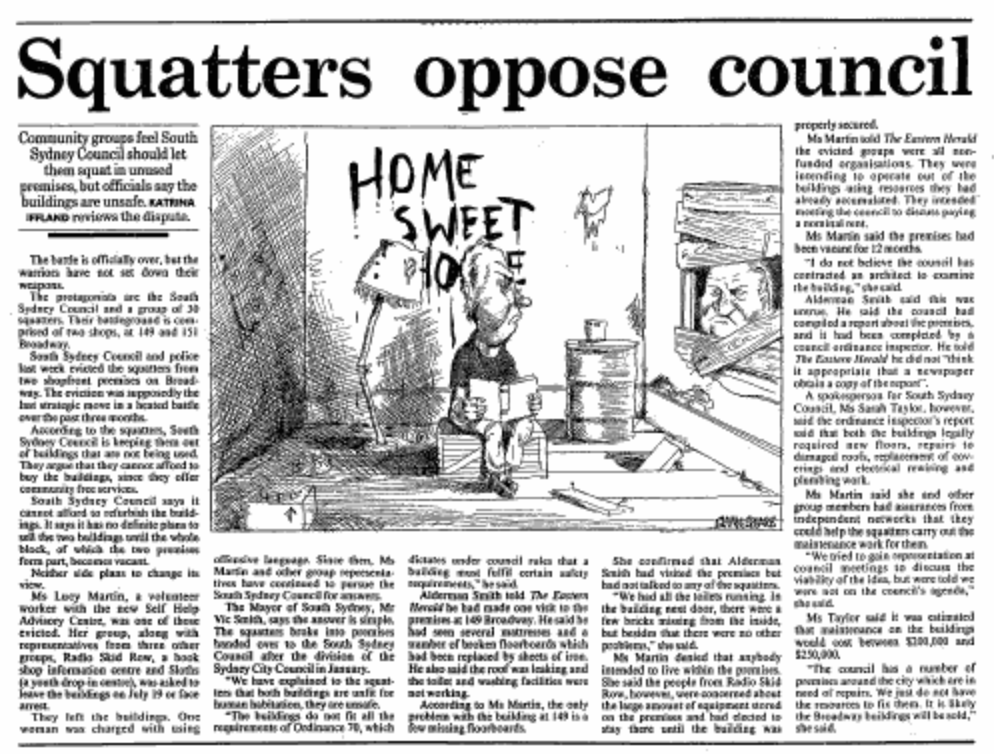
Squatters oppose council. The Sydney Morning Herald. 27th July 1989. (109).
SQUATTERS STAY OVERNIGHT
During the mass squatting action, excellent internal communication ensured squatters remained present onsite at all times. This included overnight stays, which was often a lot of fun. A camp kitchen was installed, and fresh produce was transformed into hot meals doled out to the hungry, which is usually everyone during such busy days.
Between the more serious moments that included the odd media interview, police and council liaison, and local community door knock, a convivial and rather festive mood permeated the squatting enterprise.
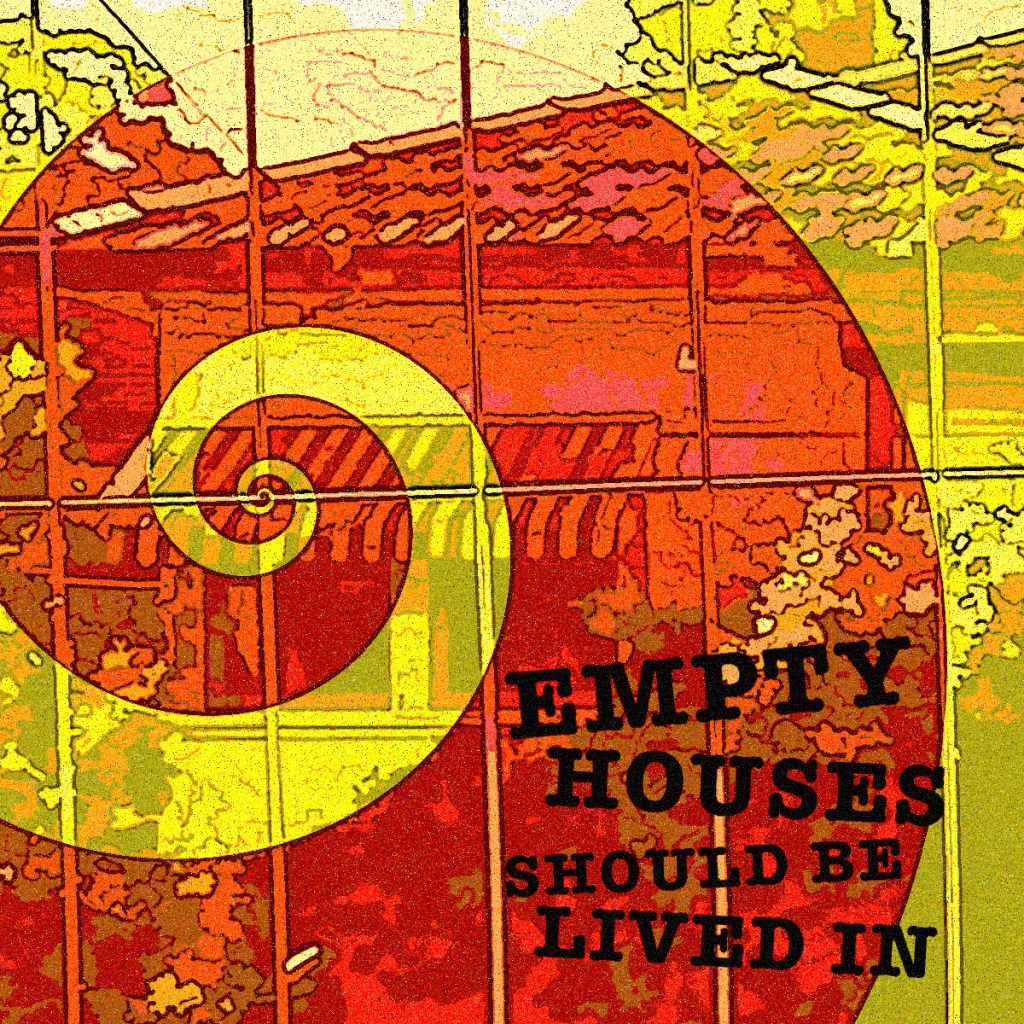

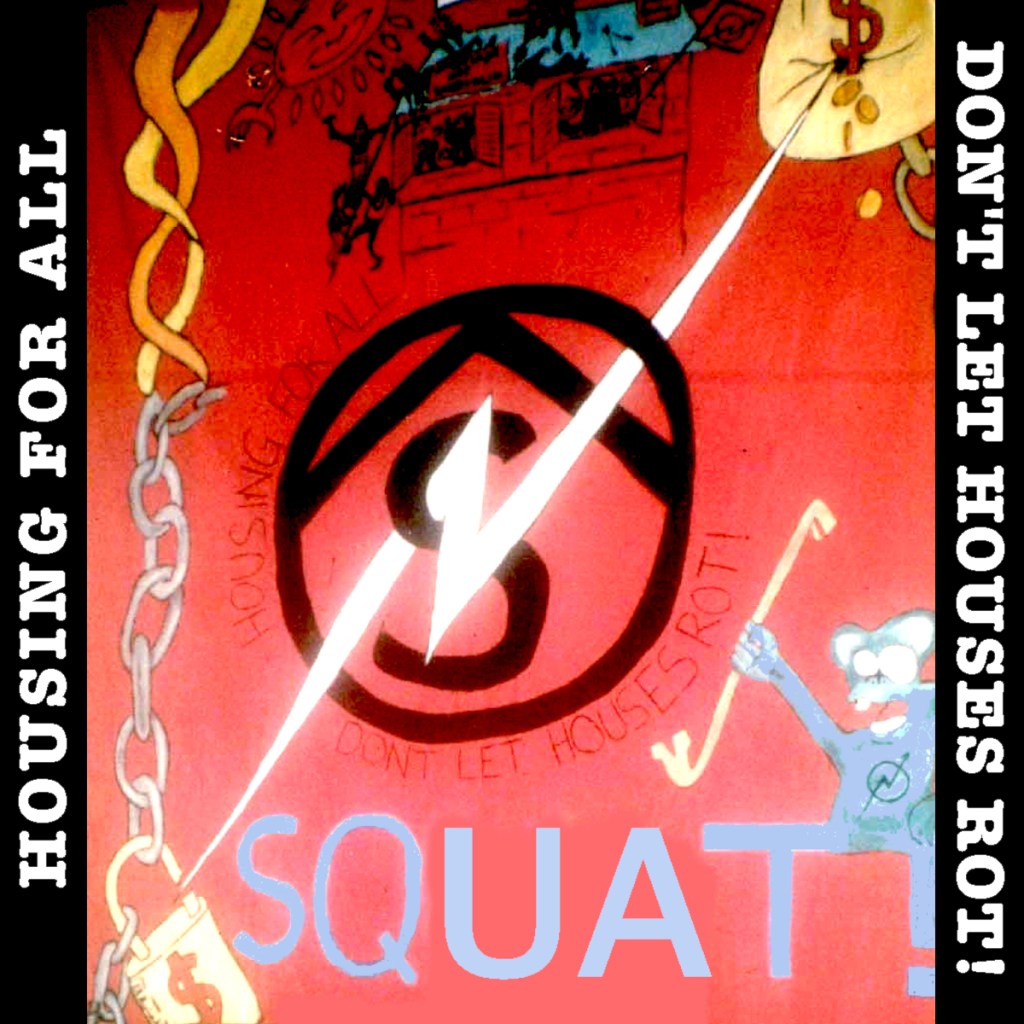
Original SQUAT! banner from 1990
Retouching | Keith Salter
LIVING HISTORY
Want to hear a real squat eviction?
Non Bossy Posse | Eviction
with megaphone contribution by Keith Salter
I’m inside. I’m upstairs. I’m on the terrace balcony. Someone hands me a megaphone.
“Empty houses should be lived in!”
“We’re not giving up. We need housing and we need housing now. Not tomorrow, not ten years time, but bloody well today!”



Author | Keith Salter
 Punk Human
Leave a comment