MUSEUM OF THE VIETNAMESE REVOLUTION
Hanoi (Ha Noi) | Vietnam
The Vietnam National Museum of History was established in 2011 and amalgamates the National Museum of Vietnamese History with the National Museum of the Vietnamese Revolution. As of 2026, both museums continue to have their own building – they sit across the road from one another – and maintain unique and distinctive collections.
This review and commentary will focus solely on the former National Museum of the Vietnamese Revolution.
“The building at 216 Tran Quang Khai street (the former National Museum of the Vietnamese Revolution) was constructed in 1917 as the headquarters of the Indochina Department of Trade. In 1954, when the North was liberated, the Government Council led by President Ho Chi Minh decided to transform this building into a new Museum of the Vietnamese Revolution, which would showcase Vietnamese history from the mid-19th century to the present day. After 5 years of planning and development, the Museum was officially opened to the public on 6 January 1959.” (Emphasis added)
The Vietnam National Museum of History (Vietnamese Revolution) details the exciting and inspiring story of the Vietnamese path to freedom and enlightenment through an array of Vietnamese cultural artefacts that include various objects, paintings, sculptures, oversize photographs, life-size relics, and critical documents such as historical newspaper clippings.
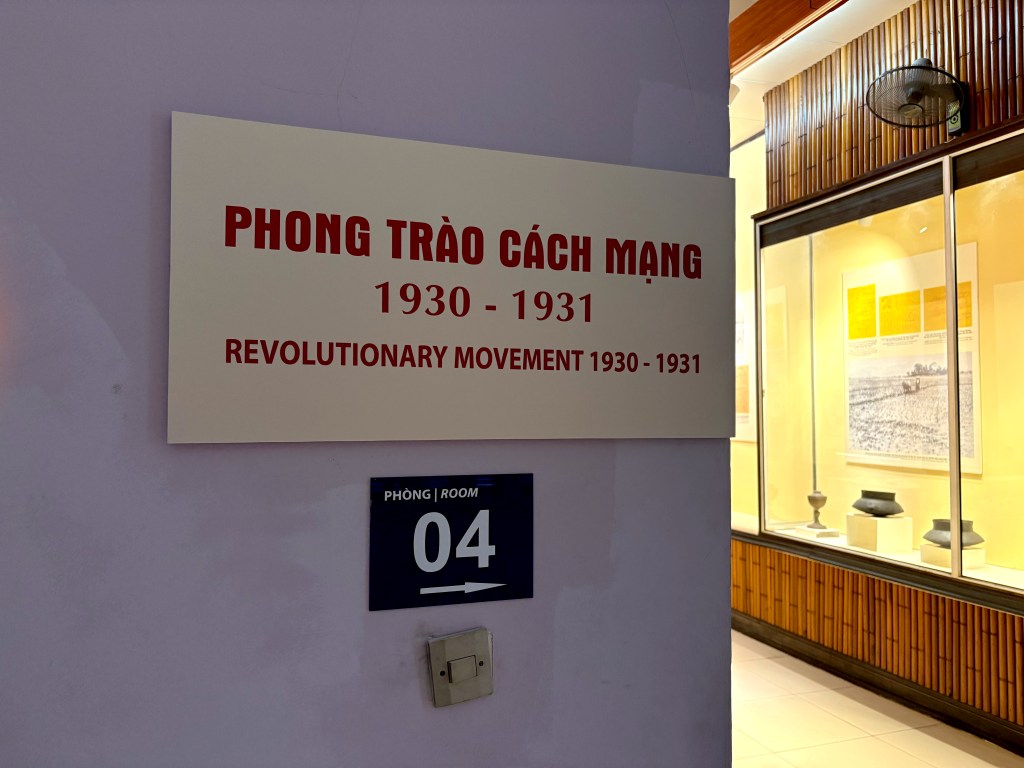
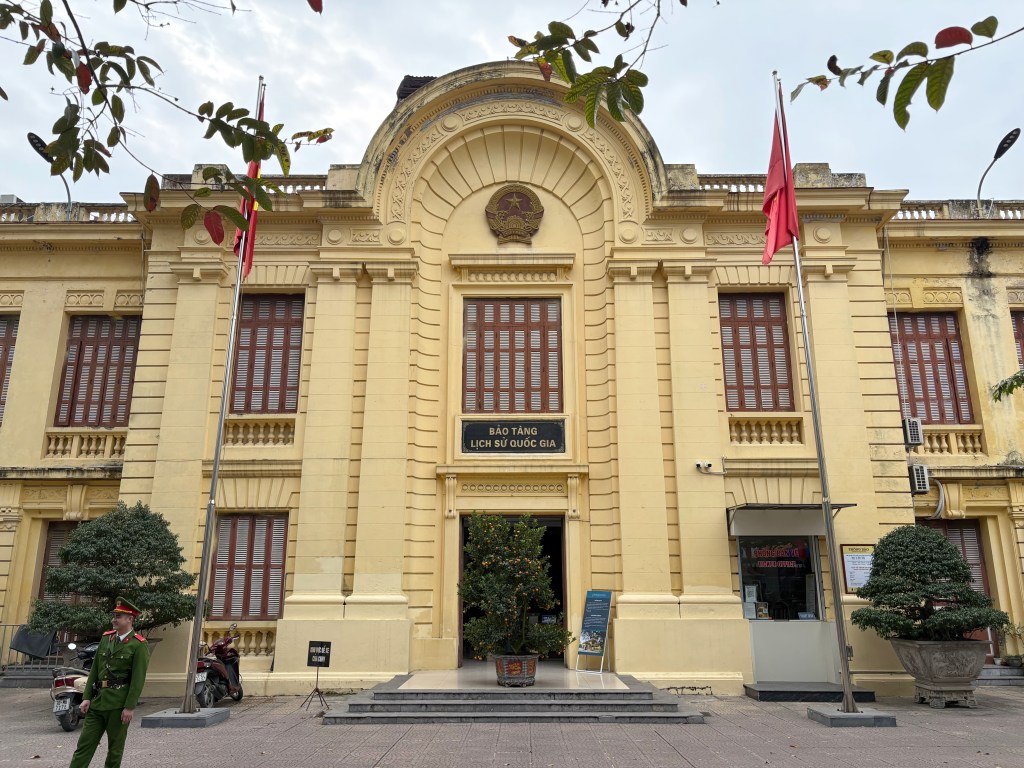
Room description and building (museum entrance)
Photo | Keith Salter
The collection provides visitors with the opportunity to vicariously experience the thrill of removing a colonial oppressor. And that is certainly an attractive prospect when considering a visit to any museum. But I suspect the true value – the pearl within the oyster – quite possibly resides within the totality of the exhibition which clearly shows how national liberation was accomplished within Vietnam between the years 1858 and 1975.
The museum collection consists of over 80,000 documents and artefacts which are on display over two levels. The exhibition narrative commences on the upper level. To begin the tour, walk up the stairs, turn right, and walk to the end of the corridor, which is where you will find Room 1.
Four distinct subject areas are identified within the collection. Each operates within a particular timeframe or historical era. These subject areas include: The struggles for independence of the Vietnamese people (1858-1945); The resistance against French colonialism (1946-1954); The resistance against American imperialism, Liberation of the South and unification of the country (1955-1975); and Vietnam on the path to building a prosperous people, strong country, and a fair, democratic, and civilised society (1976 to the present day).
Well worth a visit if you want to understand and experience the rich history and culture of Vietnam.
What to look out for…
• The guillotine that was used by the French occupiers to behead Vietnamese prisoners, including political prisoners.
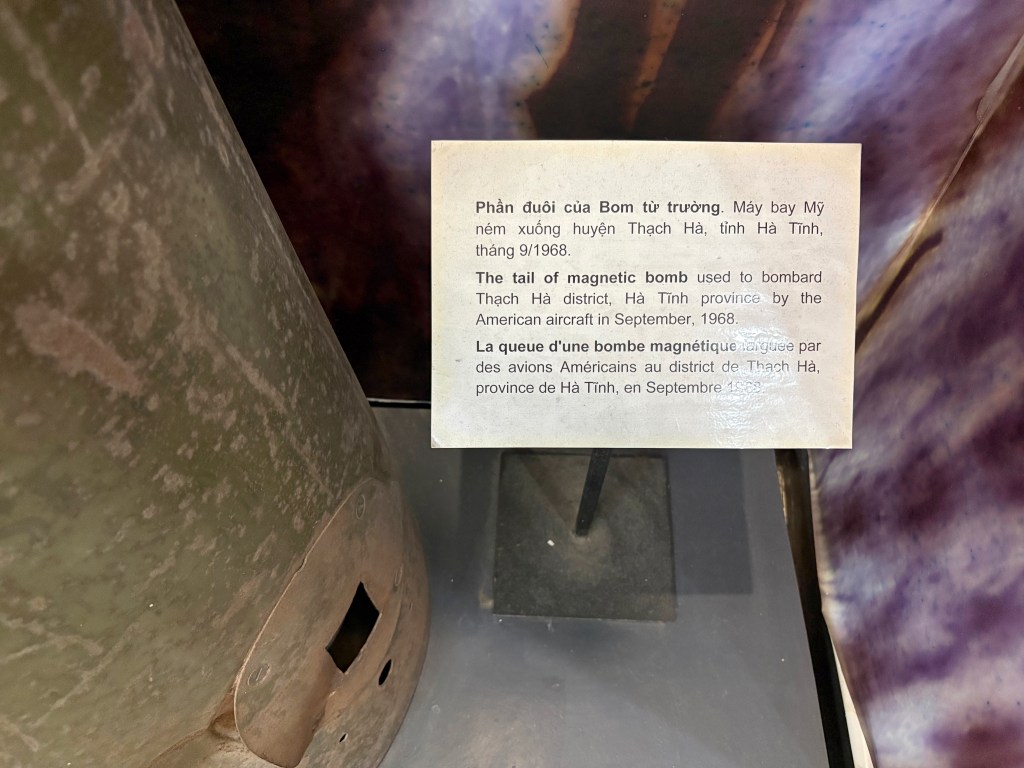
• The large relic of the magnetic bomb that was dropped onto Thach Ha district, Ha Tinh province, by the Americans in September, 1968.
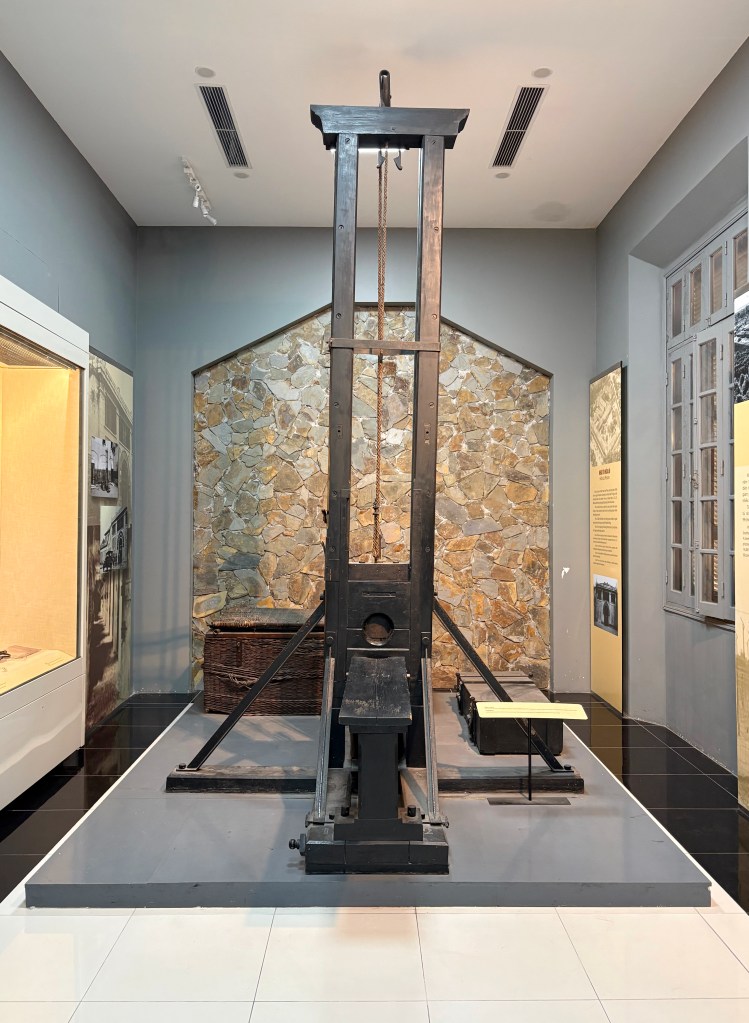
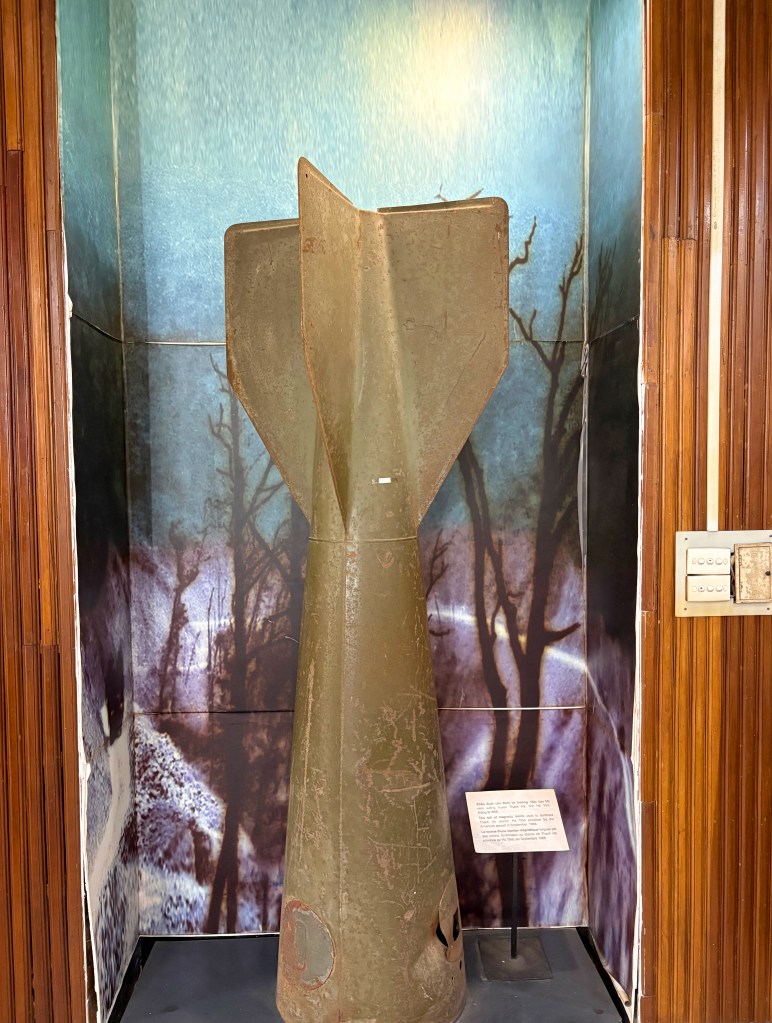
Artefacts | The colonial and imperial technology of death
Photo | Keith Salter
ACKNOWLEDGEMENT
Vietnam National Museum of History | https://baotanglichsu.vn/en

 Punk Human
Leave a comment