SYDNEY:
OUR CHANGING URBAN ENVIRONMENT
by Keith Salter
Let us consider a large block of shops that are situated along Beecroft Road in Epping.
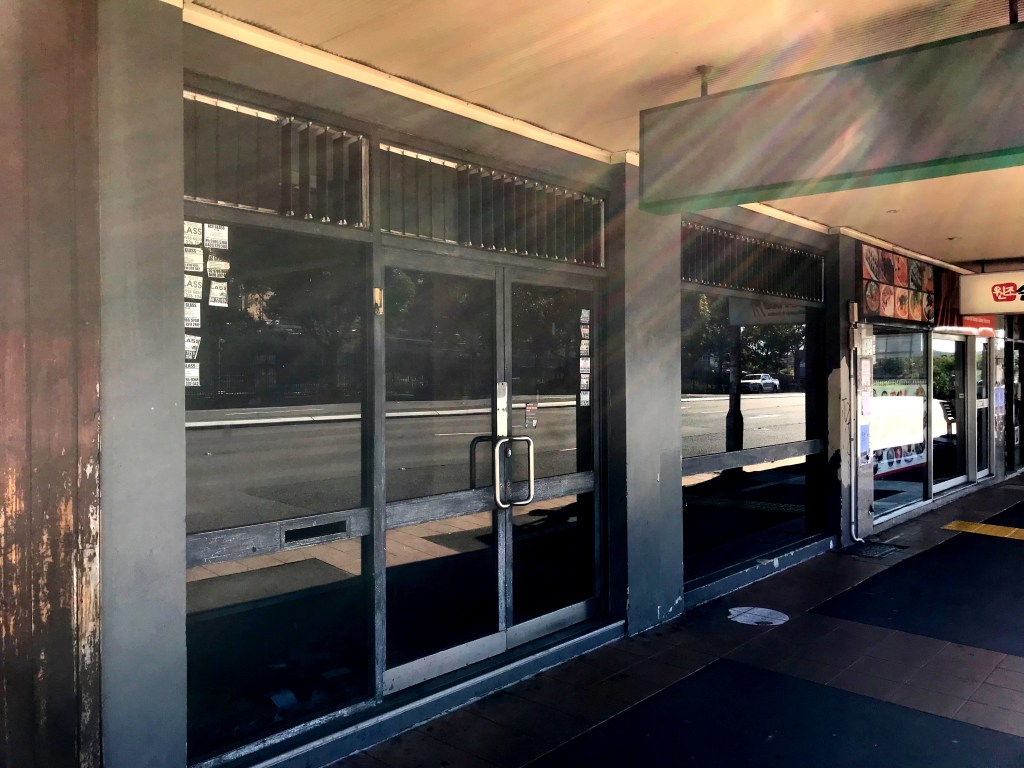
Where, various shopfronts along this main drag remain empty and evoke the look of the bedraggled. One of these, the former TAB betting shop, was closed down during the pandemic and has remained that way ever since. No renovation, modification, or construction work has been undertaken on site. The oversize street level space is simply going to waste.
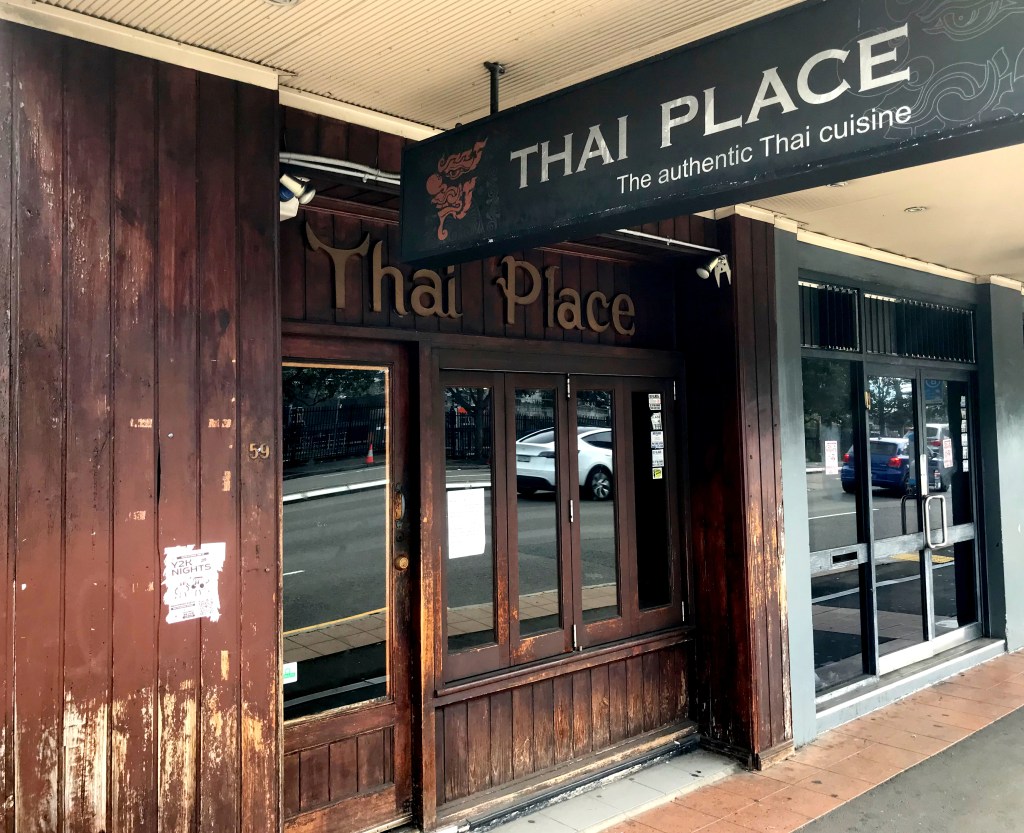
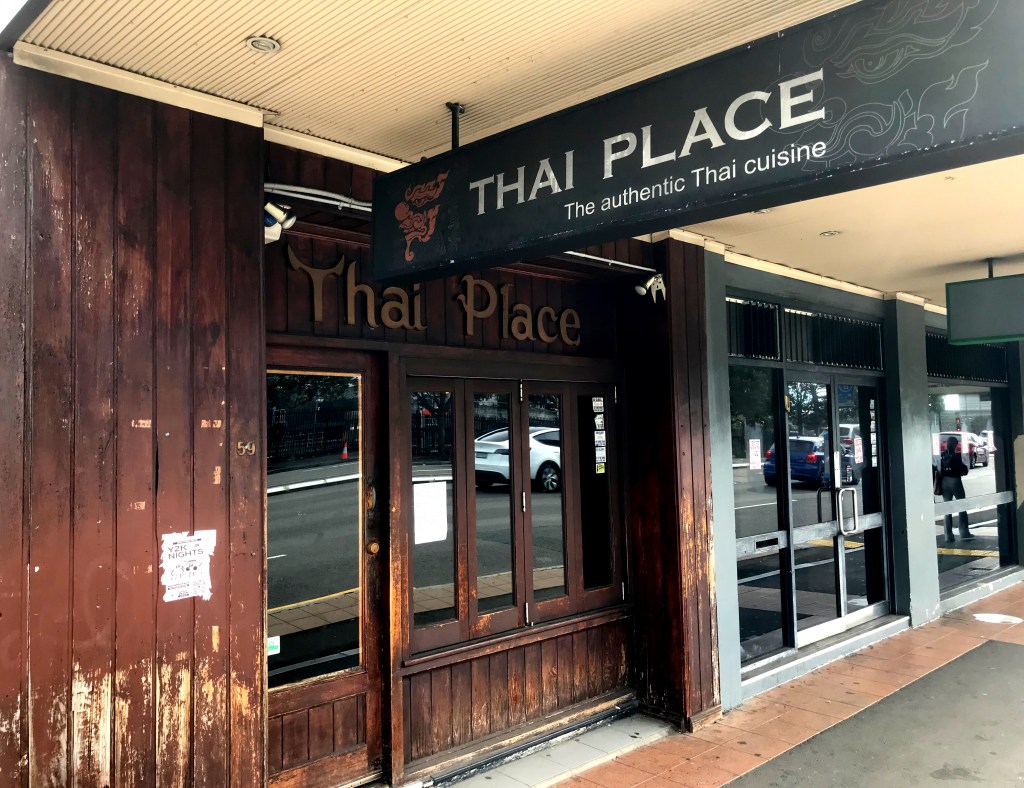
The adjoining building also remains vacant. Once a busy Thai restaurant, the business was shut down earlier this year. Nothing has changed or has been modified about this property either. And, only metres away the signs of further property abandonment can be observed.
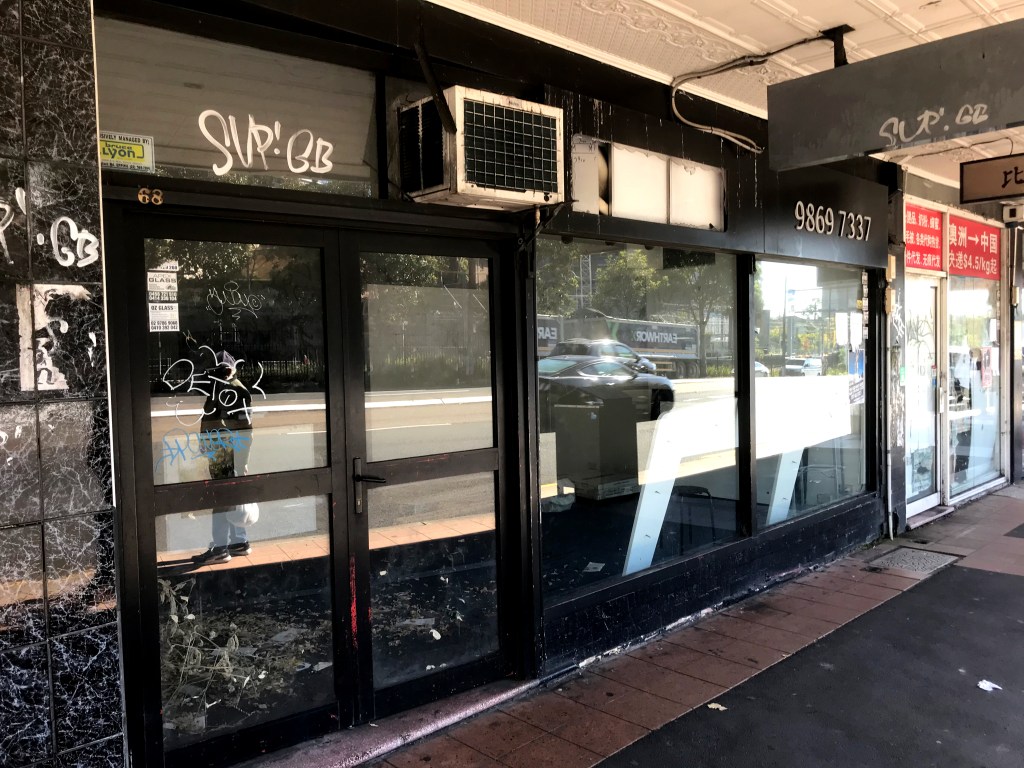
In one instance, disassembled wood panelling stands in the shop window and the shopfloor is strewn with rubbish and plant debris. In another, the window pane is accommodating a number of bill posters.
The visual ensemble epitomises a culture of social disorganisation, abandonment of responsibility, and environmental waste. More shops sit empty along this busy strip.
But what could be the cause of this destruction of community? Wandering down the public walkway that runs adjacent to one end of this block, I encounter a council development proposal attached to the brick wall of the former Thai restaurant. Its weatherbeaten appearance exudes the charm of the museum basement. The information displayed indicates the likely cause of this modern urban decay, which is, the potential construction of 126 residential units and around 5000 square metres of shops. Also indicated therein, is that the notification period ended in November 2021.
Nearly three years later, the project seems to have achieved nothing but the closure of local business and the abandonment of multiple business premises. Like the slow creep of a wasting disease, it surely will not be too long before another shop along Beecroft Road is vacated, and its business chased away.
On the face of it, some may argue that this represents a reasonable property development. The council proposal promises that additional housing will be constructed upon the large site. But who will own these residential units and who will live in them? Will local people own them or will wealthy investors who live elsewhere purchase them and park some money until needs must. And, will investors be compelled to rent out their properties, or will those investment properties sit empty and simply accumulate value over time for the investor?
Moreover, given the high cost of rent in Sydney, will local people be able to afford to live in these brand new residential units? Maybe they will, maybe not. It is this uncertainty that not only undermines confidence in the local housing market as a means to supply appropriate accommodation but also in relevant government policy and programme.
After all, when was the last time any government constructed residential properties for the working class in the vicinity of a train station within a built up area? It seems that we are always being moved on.
Given the lack of movement related to the Beecroft Road properties that have been slated for demolition, one may wonder if any further progress is likely to occur. Because quite a bit of time has passed between the declaration of intent and the present day. And, as mentioned, the actual construction project is yet to begin.
It is a scenario that draws upon Sydney’s earlier history. During the 1990s, a giant hole was excavated in the middle of Sydney city and simply left there. Situated upon George Street, the enormous crater would fill with rainwater during every downpour. The eyesore and useless public space remained that way for a decade. Are we headed for a similar scenario in Epping?

 Punk Human
Leave a comment