A PLACE TO CALL HOME
by Keith Salter
The trend towards mass homelessness has re-emerged in Sydney. An encampment of homeless people has established itself within Martin Place, a paved mall situated above the Martin Place underground train station. The mall, which includes many posh shops operating in London west end mode, flows downhill into the city centre from the State Parliament House and its neighbour, the State Library of New South Wales. The homeless have gathered here enmasse, apparently understanding that there is safety in numbers.
The architectural overhang of the nearby building provides those sleeping rough with immediate cover from rainfall. Most of the homeless have sleeping bags, and a few have a blanket or two. In some places, milk crates are overturned to form a “bed base,” which is then covered with cardboard. In others, the cardboard has been laid flat directly on the ground, underneath the “bed,” to keep the chill to a minimum. However, each person sleeping out of doors must surely still feel the cold air penetrate into their bones after dark.
Local workers, mostly dressed in business attire, go about their business as if this pop-up community was an ordinary feature of Sydney life. Many glance in the direction of the encampment, and seemingly take note of its not-too-shabby inhabitants, who remain sober, alert, and pleasantly engaging. One homeless person, Zoe, who is currently situated at the Martin Place encampment, informed this reporter that she became homeless after she “was bashed and had her clothes and shoes stolen.” Once this violence had occurred, she had simply understood that she could not stay in her present living environment. Having no better options, she soon took to the streets, seeking safety and community amongst others with similar experiences.
Another rough sleeper rued the absence of lockers nearby, explaining that if each homeless person had access to a locker, they could secure their possessions during the daytime. Local train stations in Sydney have long since removed their public lockers. Worrying about possessions or carting a load around town can add an additional layer of stress to an already difficult time. However, the State Library is just up the road and does provide lockers once you take up membership with them, which is free to all residents of New South Wales. As many homeless people are without phones and electronic devices, it is also useful to know that the Library can also provide free internet access.
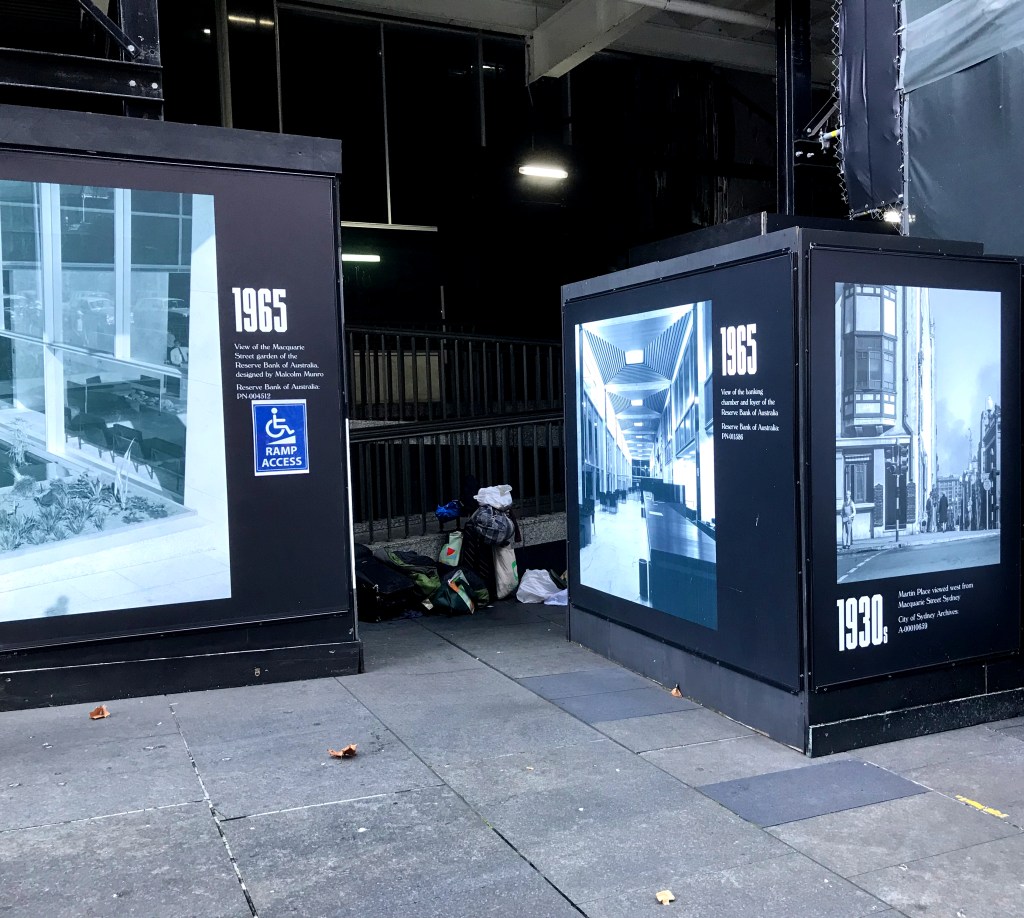
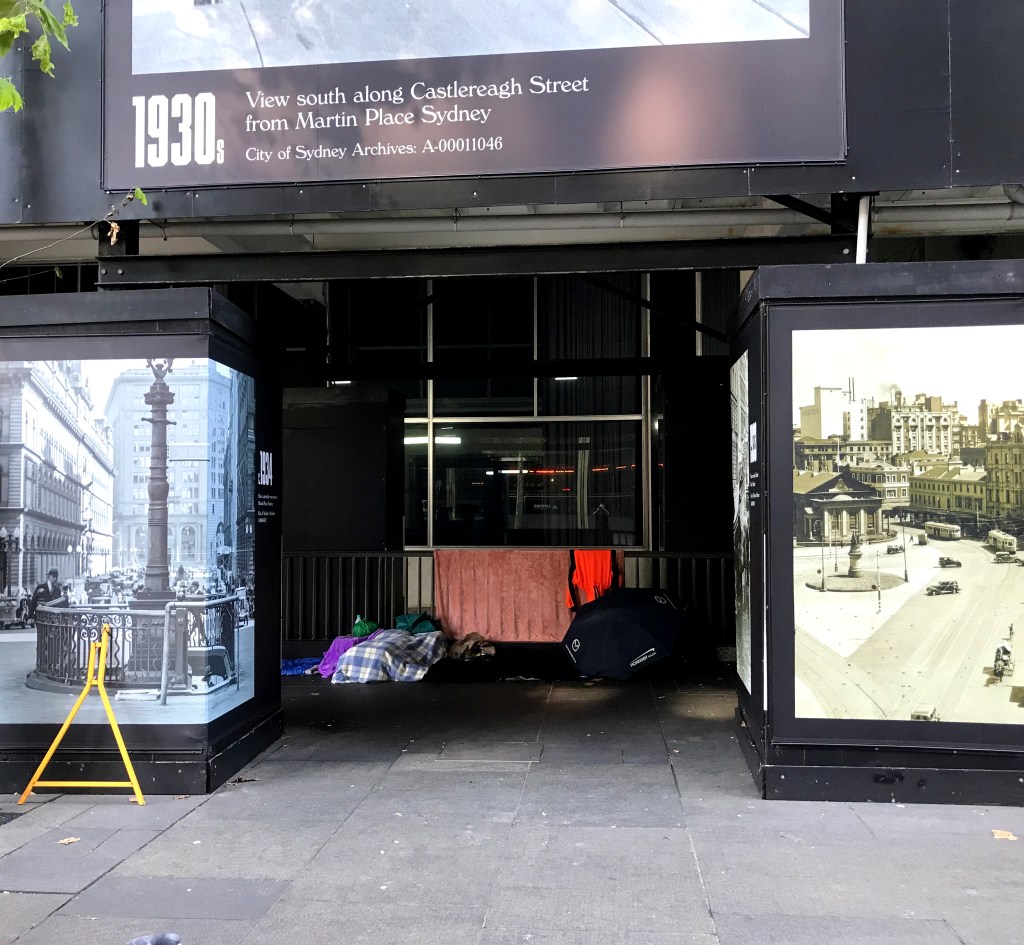
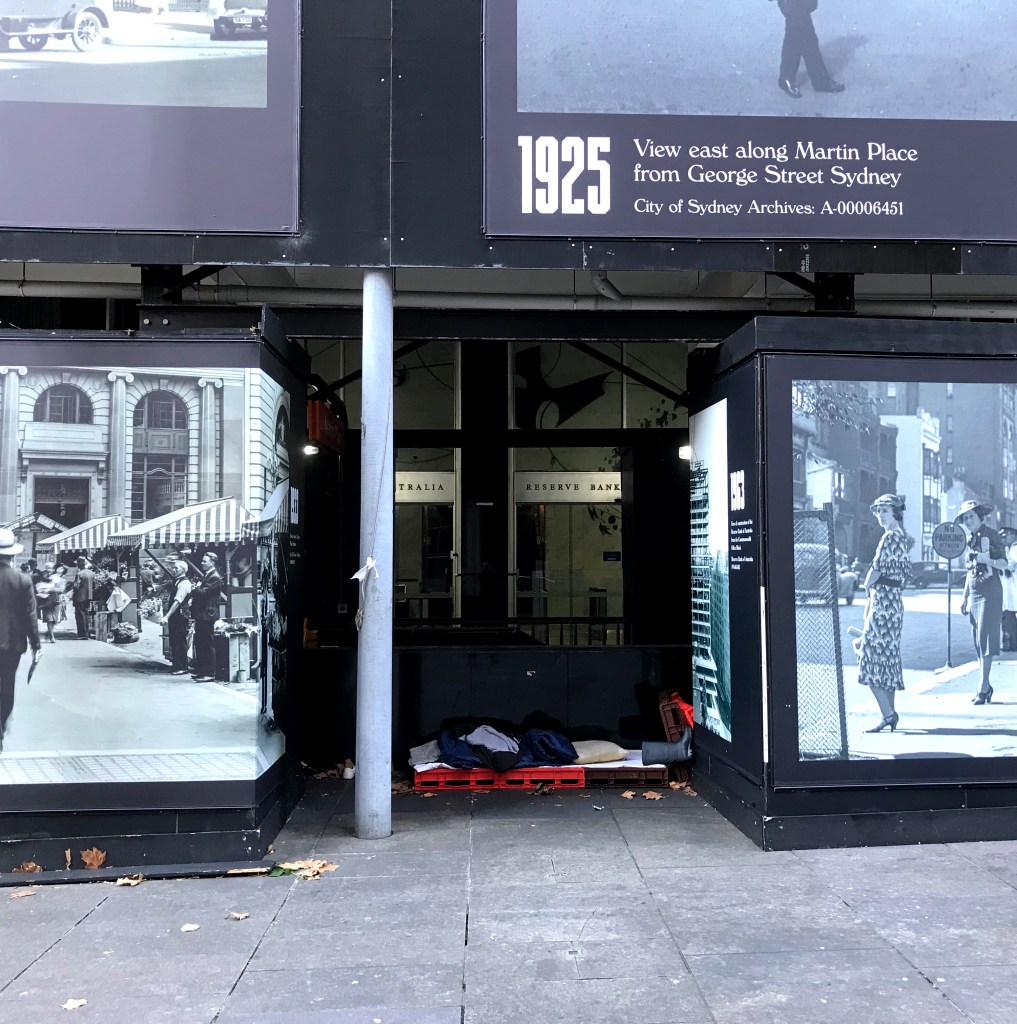
May 2024 | Various sleeping arrangements at Martin Place | Photo: Keith Salter
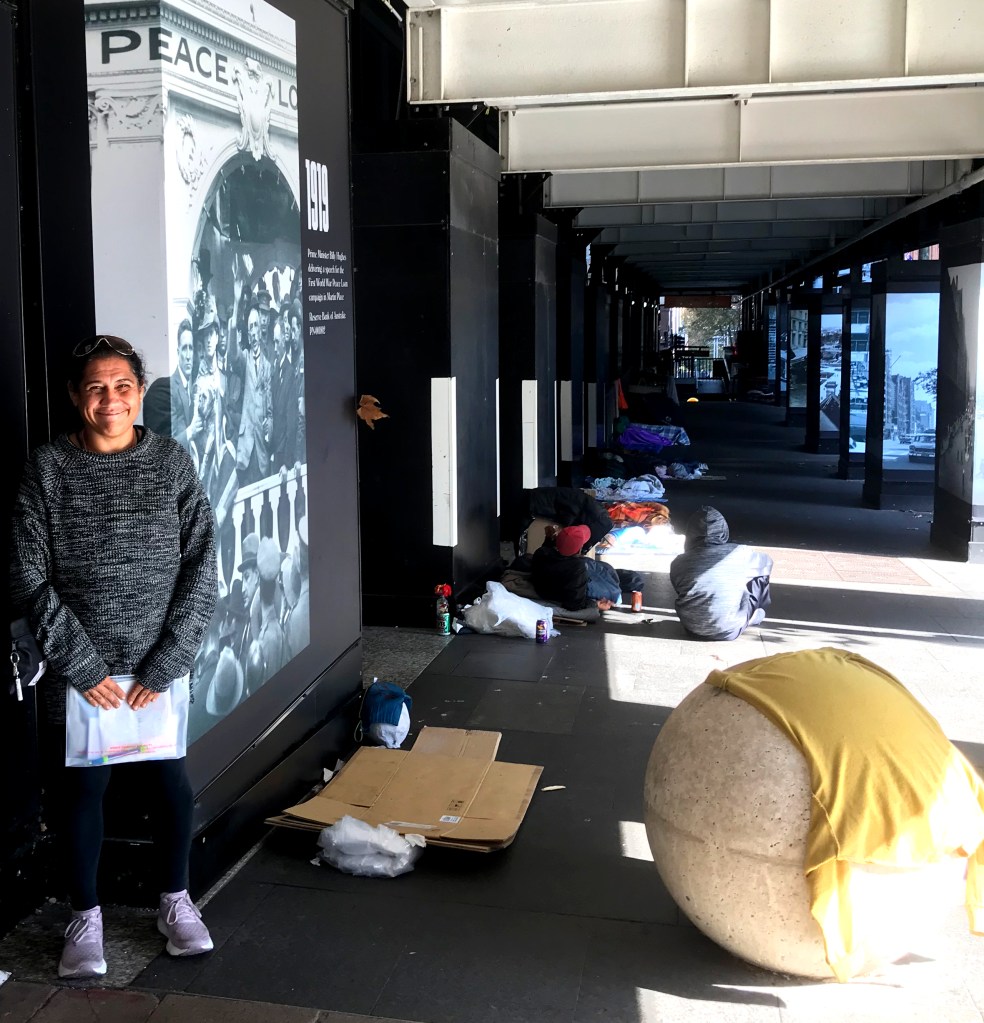
May 2024 | Zoe at Martin Place homeless encampment | Photo: Keith Salter
Whilst viewing the Martin Place homeless encampment may cause one to reflect upon the poor quality of emergency housing services currently provided by the State, it also highlights a greater social problem. The simple task of obtaining a place to live for oneself and one’s family is becoming impossible. An assortment of social and political factors appears to be undermining home ownership as well as obstructing many people from securing permanent accommodation. Those saving for a housing deposit are having their money inflated away. It remains the same for prospective renters who are saving up for a rental bond or security deposit. By the time you go to use your savings for accommodation, you find you need a bit more, and on it goes.
There is quite clearly a genuine shortage of available housing stock for people to move into. Some blame immigration, although the housing shortage is probably more the result of longstanding government mismanagement of the type that has failed to put local people first. The home purchasing market has also exploded in terms of unit price, ensuring that buying a house and then turning it into a home is something that will never occur in the lives of most ordinary people. The cost of rent has also skyrocketed, along with everything else including food staples, and the current government has precisely zero ideas on how to resolve the crisis. To make matters worse, alternate political parties are similarly baffled or continue to stubbornly pursue policy and programme that evidently does not work.
Building more dwellings to accommodate population growth is an excellent idea. But each new housing estate will also require infrastructure and access to facilities. A quick survey around Sydney will demonstrate that many suburbs, predominantly in working class areas, have no train stations and no major retail outlets. This is evidence of contemptuous urban design that lacks an understanding of what it means to be human. Moreover, if property investors can snap up all the new properties that come onto the market after a new estate is completed, then our local housing supply will be at the mercy of a very small section of society. The material interests of property speculators are not the same as owner occupiers, who must live in the property they own and must act appropriately and thoughtfully within the neighbourhood. Therefore, building and expanding the current supply of housing alone will not resolve the plight of homelessness. Other things also need to occur. Because lack of housing is a social disease, it remains bigger than a single industry sector.
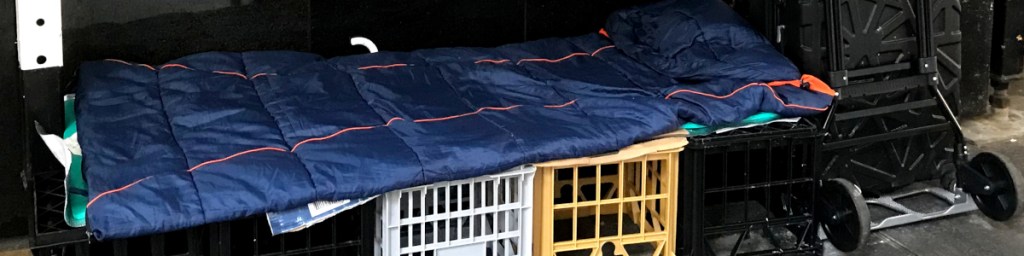
May 2024 | Sleeping arrangements at Martin Place | Photo: Keith Salter
Our suburbs are littered with abandoned properties that sit idle. These properties, once they have sat idle for two years, could be nationalised and delivered back into the national housing stock. Such a policy would serve as incentive for property owners to use housing stock appropriately or forfeit it. It would also ensure that our neighbourhoods did not turn into dead zones that are filled with rows of empty houses. However, given the options on the voting card, it is unlikely that Australia will seek to nationalise housing stock. Hence, it would be far more pragmatic to simply squat in these empty properties and transform each of them into a wonderful home. Which would require initiative, organisation, and courage.
A national squatting movement would be a boon for the homeless. Rather than sleeping rough on the streets, they could be warm and safe under a solid roof and within four sturdy walls. And, instead of worrying about having their possessions stolen or “removed” from their encampment in Martin Place or elsewhere, they could feel secure behind a locked front door. However, a national squatting movement requires organisation and persistent unpaid effort. It probably also requires a single issue social media channel to promulgate the value of squatting empty properties, as well as to provide important information and relevant updates. In practice, organising and maintaining a campaign of squatting actions will mean defying the perceptions of bigots and those who simply see things differently. Much of this is possibly beyond the capability of any person who is presently homeless, simply due to the many demands that appear once you are without your own place. This is why any national squatting movement will require the involvement of those who already have homes. The unifying principle is that housing is a human right.
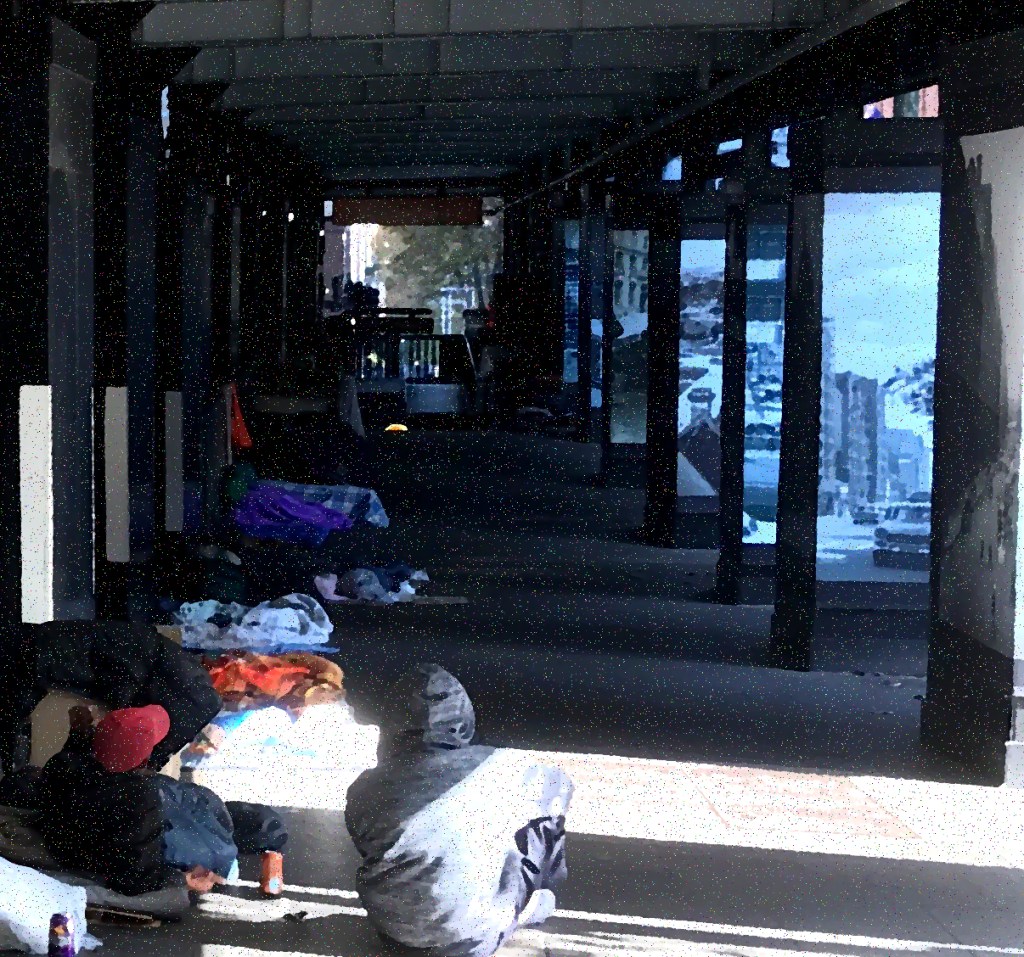
May 2024 | Homeless encampment at Martin Place | Photo: Keith Salter

 Punk Human
Leave a comment