FAHRENHEIT 451
by Ray Bradbury (1954)
It has been a very long time since firemen put out fires. Now, it is the firemen who start the blazes. Within this madness, there exists a method, which is to burn all books. Hence, when a call is placed with the Fire Brigade, it is the call of the informer, grass, and fingerman, which then precipitates a fire emergency. Once on the scene, the Salamander is parked, and its tanker of kerosene is sprayed through hose and nozzle onto the homes of those who dared to read. Guy Montag is a fireman who has developed doubts, not yet realising that this scenario is the first step towards enlightenment. But why all the fuss about books? After all, reading is what our grandparents did, and everyone knows that the next generation is always much smarter than the former generations. The novel, the play, the satire, the reference guide, the histories: these are things that the non-reader cannot discern beyond the physical shape of the book. But Montag persists and therefore he discovers. Freedom is the availability of quality information; and the availability of leisure time to digest this information; and finally, the right to act based upon what we derive from the first two. And so, if all the books are destroyed in an ideological frenzy of book burning, how will this information be stored and retained, before being retrieved and delivered? The human library and oral history must reappear as a font of cultural value and worth. Fiction. 211 pages.
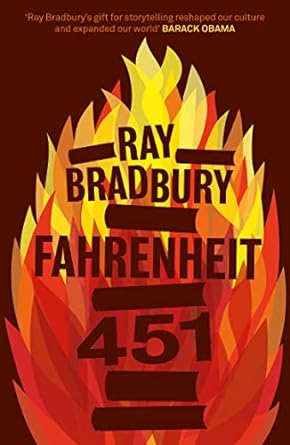
DETAILS:
Title: Fahrenheit 451
Year: 1954
Author: Ray Bradbury
Pages: 211

Book review by Keith Salter
 Punk Human
Leave a comment